
WILD WITHIN REACH
America’s Best Idea
“America’s best idea” is rooted in democracy and preservation—belonging to and existing for the people. The United States’ National Park System is widely celebrated through this phrase, most famously popularized by author Wallace Stegner and later by filmmaker Ken Burns. It reflects the radical and deeply democratic concept of preserving the nation’s most magnificent landscapes and historic sites for the benefit of all, not just the privileged few. At its core is the belief that the country’s most extraordinary places are public treasures, held in trust for future generations rather than privately owned or developed.
Burns and writer Dayton Duncan famously described this revolutionary concept as being “as uniquely American as the Declaration of Independence and just as radical.” National Parks serve as a living expression of democracy—a physical manifestation of the nation’s founding ideals, where the land itself belongs to the people. They are works of art in their own right: landscapes of immense beauty meant to be experienced, protected, and cherished generation after generation.
This grand idea formally took shape not long after the end of the American Civil War with the establishment of Yellowstone National Park in 1872. Signed into law by President Ulysses S. Grant, it became the world’s first national park. Inspired by a desire to protect the West’s unique landscapes for public enjoyment rather than private exploitation, the movement was championed by conservationists, artists, and naturalists who advocated for preserving America’s natural wonders.
Naturalist and conservationist John Muir is often referred to as the “Father of the National Park System” for his tireless advocacy on behalf of Yosemite National Park. Arriving there in 1868, Muir worked as a shepherd and sawmill laborer while studying the area’s geology, flora, and fauna. His observations helped prove that glaciers carved Yosemite Valley, and his writings and lobbying efforts ultimately contributed to the park’s establishment in 1890, as well as the founding of the Sierra Club.

President Theodore Roosevelt later earned the nickname “The Conservation President” for dramatically expanding the nation’s protected lands. During his presidency, he doubled the number of existing national parks by establishing five new ones and signed the Antiquities Act of 1906, which granted presidents the authority to protect significant lands as national monuments. A decade later, President Woodrow Wilson signed the Organic Act of 1916, officially creating the National Park Service under the U.S. Department of the Interior to oversee the nation’s growing park system.
While the United States is indeed responsible for pioneering this grand idea and establishing the world’s first national park, many nations have since developed expansive systems of their own to safeguard their natural treasures. Today, nearly 100 countries around the world maintain national parks, with more than 6,000 protected sites dedicated to preserving natural landscapes, biodiversity, and cultural heritage.
There are now 63 National Parks across the 50 States. California leads the nation with nine national parks, followed by Alaska with eight, Utah with five, Colorado with four, and Arizona, Florida, and Washington each with three. The diversity found across the Golden State’s national park lineup is extraordinary—from alpine peaks and ancient sequoias to deserts, coastlines, and volcanic terrain.
For residents of the Central Valley, many of these remarkable destinations are only a few hours away. Whether seeking adventure, solitude, inspiration, or simply a greater appreciation for the natural beauty in our own backyard, there has never been a better time to explore California’s national treasures. The parks are not only destinations, but enduring reminders of the extraordinary beauty, diversity, and shared heritage that define the American landscape—and they are closer than many may realize.
CALIFORNIA’S NATIONAL PARKS

Northern California
Redwood National Park
Founded in 1968
Home to the tallest trees on Earth, Redwood National and State Parks offer one of California’s most awe-inspiring natural escapes. Spanning the rugged Northern California coastline, the park protects nearly half of the world’s remaining old-growth coastal redwoods, with some soaring more than 350 feet tall and standing for over 2,000 years. Misty forests, fern-lined canyons, dramatic ocean bluffs, and untamed beaches create a landscape that feels almost prehistoric in beauty and scale. Positioned roughly 325 miles north of San Francisco near Eureka, Crescent City, and Arcata, the park offers unforgettable scenic drives along the Avenue of the Giants and Newton B. Drury Scenic Parkway, which immerse visitors beneath cathedral-like groves, while trails such as Fern Canyon and Lady Bird Johnson Grove showcase some of the park’s most iconic landscapes. Roosevelt elk and migrating gray whales further elevate the experience. Equal parts serene escape and bucket-list destination, Redwood is a reminder of nature at its most monumental—a journey into one of America’s last ancient forests.
Lassen Volcanic National Park
Founded in 1916
Lassen Volcanic National Park in northeastern California is a striking landscape shaped by fire, water, and geothermal activity. It is one of the few places on Earth where all four types of volcanoes—shield, composite, cinder cone, and plug dome—can be found in a single park. The terrain is a mix of steaming fumaroles, bubbling mud pots, alpine lakes, lava fields, and forested peaks. It is about 200 miles northeast of Sacramento and accessible via nearby towns such as Redding, Chester, and Susanville. The park is best explored along the Lassen Volcanic National Park Highway, which offers sweeping mountain views at every turn. Visitors have access to gentle lakeside walks and challenging summit hikes showcasing the Sierra Nevada and Cascade ranges. Key highlights include the hydrothermal area of Bumpass Hell, the vivid waters of Manzanita Lake, and the dramatic Cinder Cone with its surreal Painted Dunes. Wildlife such as black bears, mule deer, and bald eagles inhabit the park, while seasonal wildflowers add bursts of color. Both tranquil and adventurous, Lassen is a remarkable window into volcanic geology.
Central California
Yosemite National Park
Founded in 1890
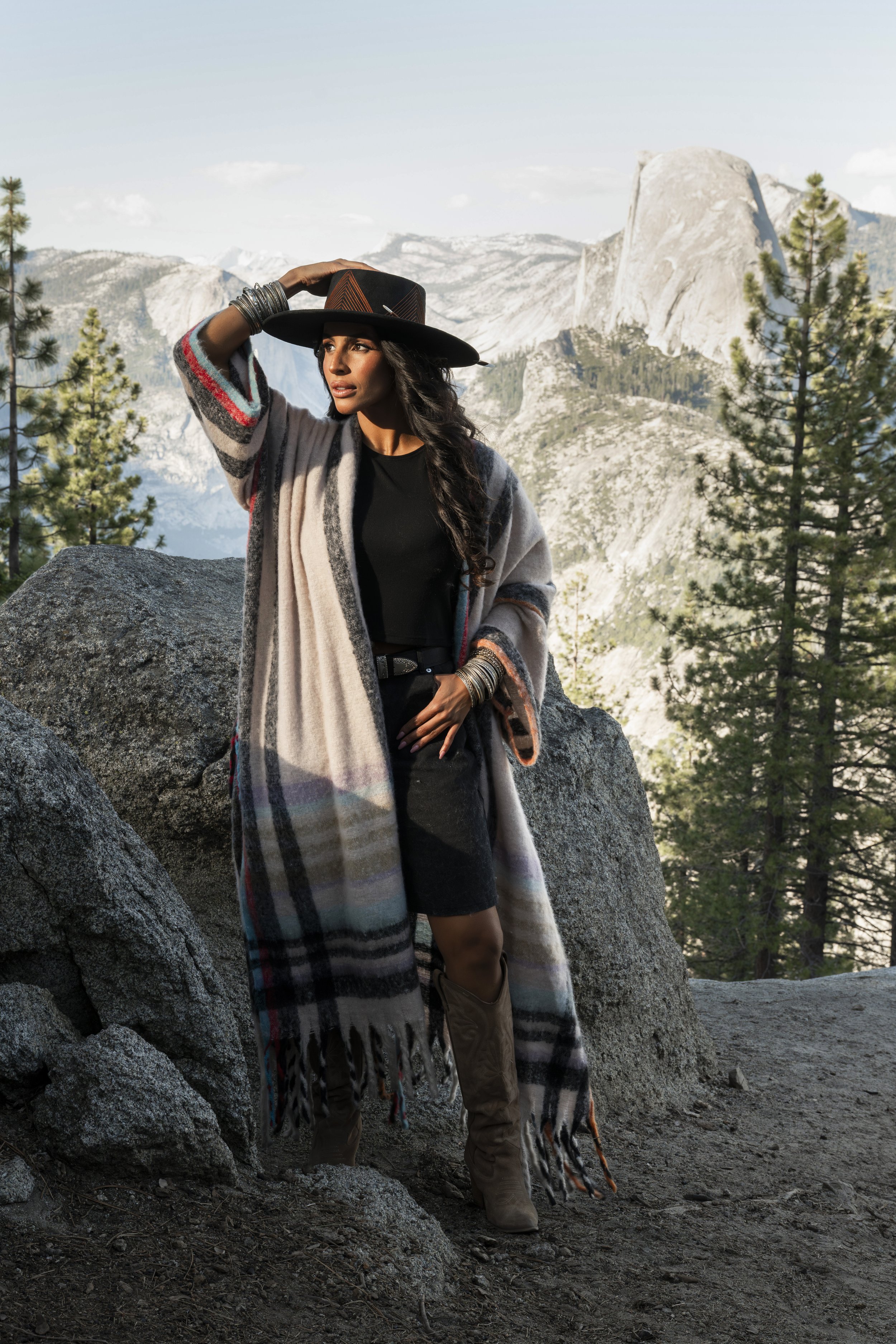
Yosemite National Park in the central Sierra Nevada Mountains is a landscape carved by glaciers, defined by towering granite cliffs, cascading waterfalls, and sequoia groves. It is one of the most iconic examples of glacially sculpted terrain in North America, where massive rock formations such as Half Dome and El Capitan rise above the Yosemite Valley. Located upwards of 60 miles north of Fresno and en route through mountain towns such as Mariposa, Oakhurst, Groveland, and Lee Vining, the park is best explored via Tioga Road and Glacier Point Road. Visitors can choose from gentle valley strolls to strenuous climbs like the Half Dome hike, experiencing dramatic viewpoints throughout. Key highlights include Yosemite Falls, one of the tallest waterfalls in North America, the iconic Tunnel View, and the giant sequoias of Mariposa Grove. Black bears, mule deer, and peregrine falcons inhabit the park, while seasonal wildflowers brighten meadows in spring and early summer. Both awe-inspiring and serene, Yosemite offers a defining glimpse into the power of ice, time, and stone.
Kings Canyon National Park
Founded in 1940
Kings Canyon National Park in the southern Sierra Nevadas is a vast and deeply carved landscape where glacier-cut canyons meet high alpine wilderness and ancient sequoia forests. The park is distinguished by the Kings River Canyon, one of the deepest in North America, descending sharply through layers of exposed granite and forested slopes. Situated roughly 180 miles east of Fresno and accessed via gateway communities such as Clovis and Grant Grove Village, the park unfolds along Generals Highway, which connects its lower foothills to high-elevation backcountry. Travel quickly shifts from dense forest to expansive mountain terrain with sweeping overlooks and remote valleys. One of the largest living sequoias on Earth, the General Grant Tree, is in Grant Grove. Wildlife includes black bears, mule deer, and Sierra Nevada bighorn sheep. Summer brings vibrant wildflower displays across high-country meadows. Kings Canyon offers an immersive experience of scale, elevation, and isolation.
Sequoia National Park
Founded in 1890
Sequoia National Park shares a boarder with Kings Canyon National Park. Both are connected by winding mountain roads that reveal dramatic elevation changes and expansive Sierra vistas. Best known for its immense giant sequoias, the park preserves ancient forests where many trees have stood for more than 2,000 years. It’s about 200 miles north of Los Angeles, and visitors usually come by way of Three Rivers and Visalia on the way to exploring quiet forest trails, subterranean marble caverns, and high-elevation alpine terrain stretching toward Mount Whitney, the tallest peak in the contiguous United States. Among the park’s most celebrated landmarks are the General Sherman Tree, recognized as the largest tree on Earth by volume, the granite dome of Moro Rock, and the underground chambers of Crystal Cave. Black bears, marmots, and mule deer are seen throughout the park’s varied ecosystems, with seasonal wildflowers and snowmelt-fed rivers adding to its dynamic beauty. Sequoia delivers an unforgettable encounter with the immense scale and enduring resilience of the natural world.
Pinnacles National Park
Founded in 2013
Pinnacles National Park in western central California is a striking landscape of towering rock spires, narrow talus caves, and rugged chaparral terrain shaped by ancient volcanic activity along the San Andreas Fault. The park’s dramatic formations originated millions of years ago from an extinct volcano that was gradually split and shifted northward by tectonic movement. San Jose is about 80 miles northwest of there, with communities such as Soledad, Hollister, and King City in close proximity. Pinnacles is divided into east and west entrances connected by a network of hiking trails rather than a through road. The Bear Gulch and Balconies cave systems, the High Peaks Trail with its narrow rock passages, and the park’s sweeping vistas framed by jagged volcanic remnants are major attractions. Pinnacles is also one of the best places in California to spot the endangered California condor, along with prairie falcons, bobcats, and mule deer. Spring wildflowers often blanket the hillsides in vibrant color. Compact yet visually dramatic, Pinnacles offers a distinctly unusual blend of geology, wildlife, and adventurous exploration.

Southern California
Death Valley National Park
Founded in 1994
Death Valley National Park spans a vast desert expanse along the California–Nevada border. Covering more than three million acres, it is both the hottest and driest national park in the United States, encompassing salt flats, sculpted sand dunes, colorful badlands, volcanic craters, and isolated mountain ranges. Found east of the Sierra Nevadas near Furnace Creek, Beatty, and Lone Pine, the park unfolds through long desert highways. Visitors can descend to Badwater Basin, the lowest point in North America below sea level, then travel upward to cooler elevations to see panoramic views stretching across the desert floor. Other landmarks include the rippling Mesquite Flat Sand Dunes, the multi-hued hills of Artist’s Palette, and Zabriskie Point, where eroded golden badlands glow at sunrise and sunset. In spring, rare wildflower blooms can briefly transform the desert landscape after seasonal rains. Wildlife adapted to the harsh environment includes bighorn sheep, roadrunners, jackrabbits, and desert foxes. Vast, silent, and visually surreal, Death Valley reveals the stark beauty and powerful forces of the American desert.
Channel Islands National Park
Founded in 1980
Channel Islands National Park protects a remote chain of five islands off the Southern California coast, where rugged shorelines, windswept cliffs, and isolated ecosystems have evolved largely untouched by mainland development. Often called “North America’s Galápagos,” the park preserves an extraordinary diversity of plant and animal life, including species found nowhere else on Earth. South of Santa Barbara and west of Los Angeles, the islands are visible from the coastline and accessed primarily by boat from Ventura and Oxnard harbors. Each island offers distinct scenery and limited inter-island travel helps preserve a quiet atmosphere rarely found in SoCal. Popular destinations include Santa Cruz Island’s painted sea caves, Anacapa Island’s lighthouse and arch rock formations, and the beaches of Santa Rosa Island. Kayaking, snorkeling, hiking, whale watching, and wildlife viewing are central to the experience, with sightings of dolphins, sea lions, bald eagles, and migrating gray whales. Spring wildflowers and coastal fog add seasonal character to the Channel Islands’ landscapes, which flourish thanks to its ecological isolation.
Joshua Tree National Park
Founded in 1994
Joshua Tree National Park occupies a striking desert transition zone where the Mojave and Colorado deserts converge, creating a landscape defined by twisted Joshua trees, massive boulder formations, and wide-open skies. The park’s unusual terrain has long attracted climbers, photographers, musicians, and stargazers drawn to its stark beauty and sense of isolation. Located east of Palm Springs not far from Twentynine Palms and Yucca Valley, the park stretches across nearly 800,000 acres of desert wilderness. Scenic roads weave through cactus gardens, weathered rock piles, and expansive valleys framed by distant mountain ranges. Among the park’s most recognizable sites are the monolithic formations of Hidden Valley, the cholla-covered plains of the Cholla Cactus Garden, and Keys View, where visitors can look across the Coachella Valley toward the Salton Sea on clear days. Desert wildlife includes roadrunners, jackrabbits, bighorn sheep, and coyotes adapted to the region’s arid conditions. Joshua Tree delivers a distinctly atmospheric desert experience shaped by silence, scale, and surreal natural forms.
Editorial Director Lauren Barisic
Photographer Ellie Koleen
Model Ivette Ibarra
Stylist Alma Wolverton
Hair Melissa Souza
Makeup Mattie Garcia
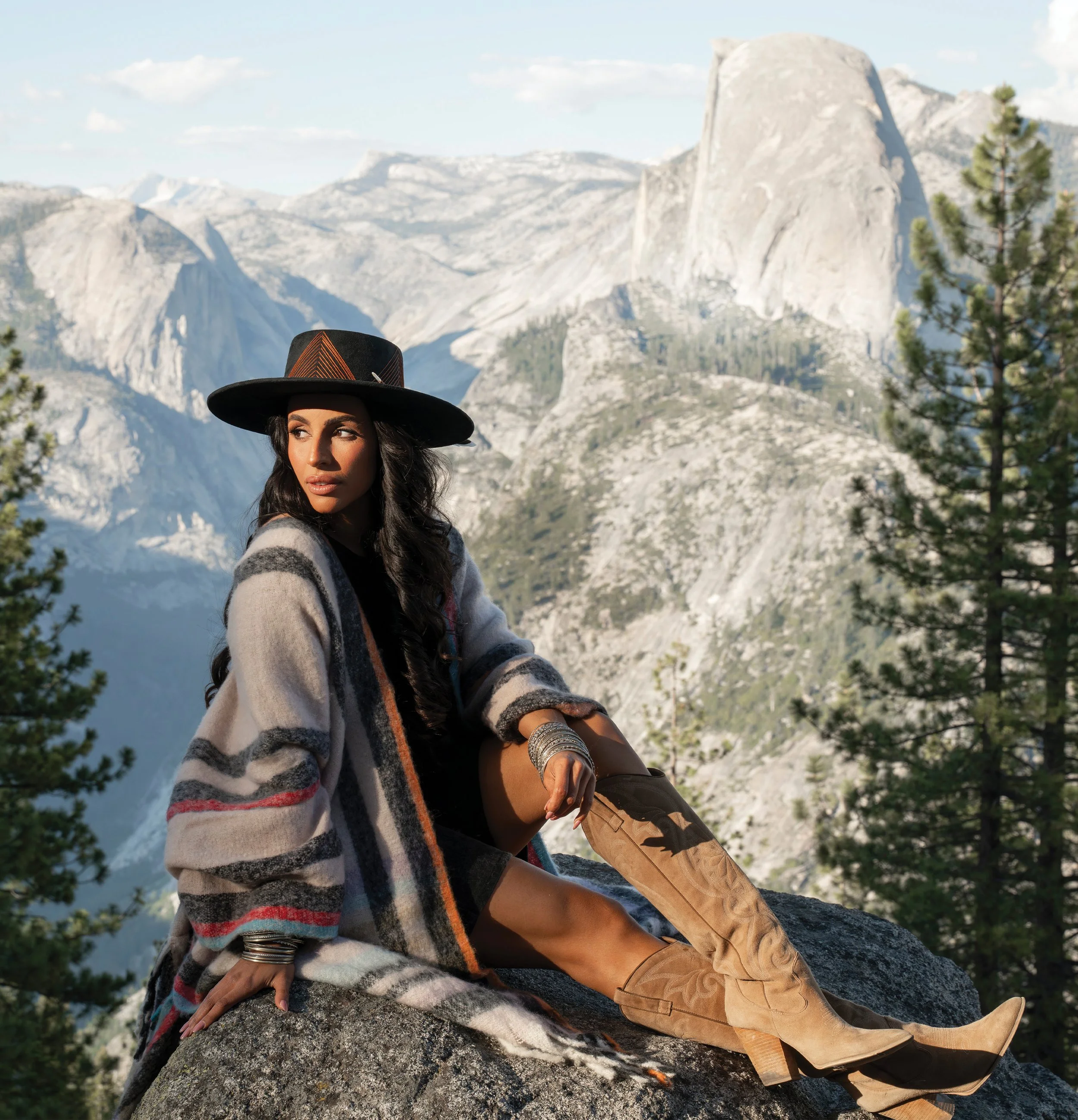
Location Washburn Point, Yosemite National Park