FROM COLLECTION TO CURATION
How to Build a Personal Body of Art
That Tells Your Story
Anyone can buy art. Curating a collection, however, is something entirely different. The most memorable homes aren’t filled with expensive pieces acquired on impulse—they’re layered with works collected over time, each contributing to a larger narrative. A thoughtfully curated collection reflects personal taste, lived experiences, and a willingness to evolve rather than follow trends.
Start with What Moves You
Before considering value, artist reputation, or market trends, begin with a simple question: Would I want to look at this every day? Many new collectors feel pressure to purchase works that are considered important or investment-worthy. While those factors may play a role later, the strongest collections begin with genuine emotional connection.
A useful rule: if you find yourself repeatedly returning to a piece, thinking about it days later, or imagining exactly where it belongs in your home, pay attention. Collections built on personal resonance tend to remain relevant long after trends fade.
Collect a Point of View, Not a Color Palette
One of the biggest mistakes new collectors make is buying art solely to match a room. Instead of asking, “Will this match my sofa?” ask, “Does this belong in my story?” The most compelling collections often contain unexpected combinations:
Contemporary photography alongside traditional oil paintings
Abstract works mixed with figurative pieces
Sculpture paired with works on paper
Emerging artists displayed beside established names
The connective thread isn’t medium or style—it’s perspective. Perspective is honed by studying your own draw points and the why behind them. Over time, viewers should begin to recognize your taste, even when the works themselves differ dramatically.
Mix Mediums for Depth
A curated collection feels richer when multiple mediums are represented. Much like layering textures in interior design, mixing mediums creates visual depth and keeps a collection from feeling predictable. Consider incorporating:
Original paintings
Photography
Mixed media works
Sculpture
Ceramics
Textile art
Limited-edition prints
Works on paper
Implementing vast medium diversity will translate to a mastery as your collection grows, which speaks to your ability to articulate said perspective. The result is a visually strong and compelling body of work that is unique to you.
Buy with Placement in Mind
Before purchasing, consider where a piece may live. Placement greatly impacts perception. Great collectors understand that art doesn’t exist in isolation. It enters into conversation with its surroundings. Ask:
Does the scale suit the space?
Is this a statement piece or supporting work?
Will it stand alone or join a gallery wall?
How does it interact with existing furnishings and architecture?
Some collectors even maintain a list of future “art opportunities” within their homes—a blank stairwell, an empty hallway, or a future renovation project—allowing acquisitions to happen with intention rather than impulse.
Think in Chapters, Not Individual Pieces
The most successful collections are rarely assembled all at once. Time enables evolution. Don’t be in a rush to “complete” a collection—doing so dismantles the big-picture that is curation. Instead, think of collecting as an ongoing editorial process. You may begin with:
Local artists from your region
Landscape works
Black-and-white photography
Female contemporary artists
California-based creators
Pieces acquired during travel
Over time, these interests begin forming themes that can guide future acquisitions. Rather than asking, “Do I like this piece?” ask, “Does this contribute to the larger collection I’m building?” Consider this an ongoing, outward dialog with and expression of self.
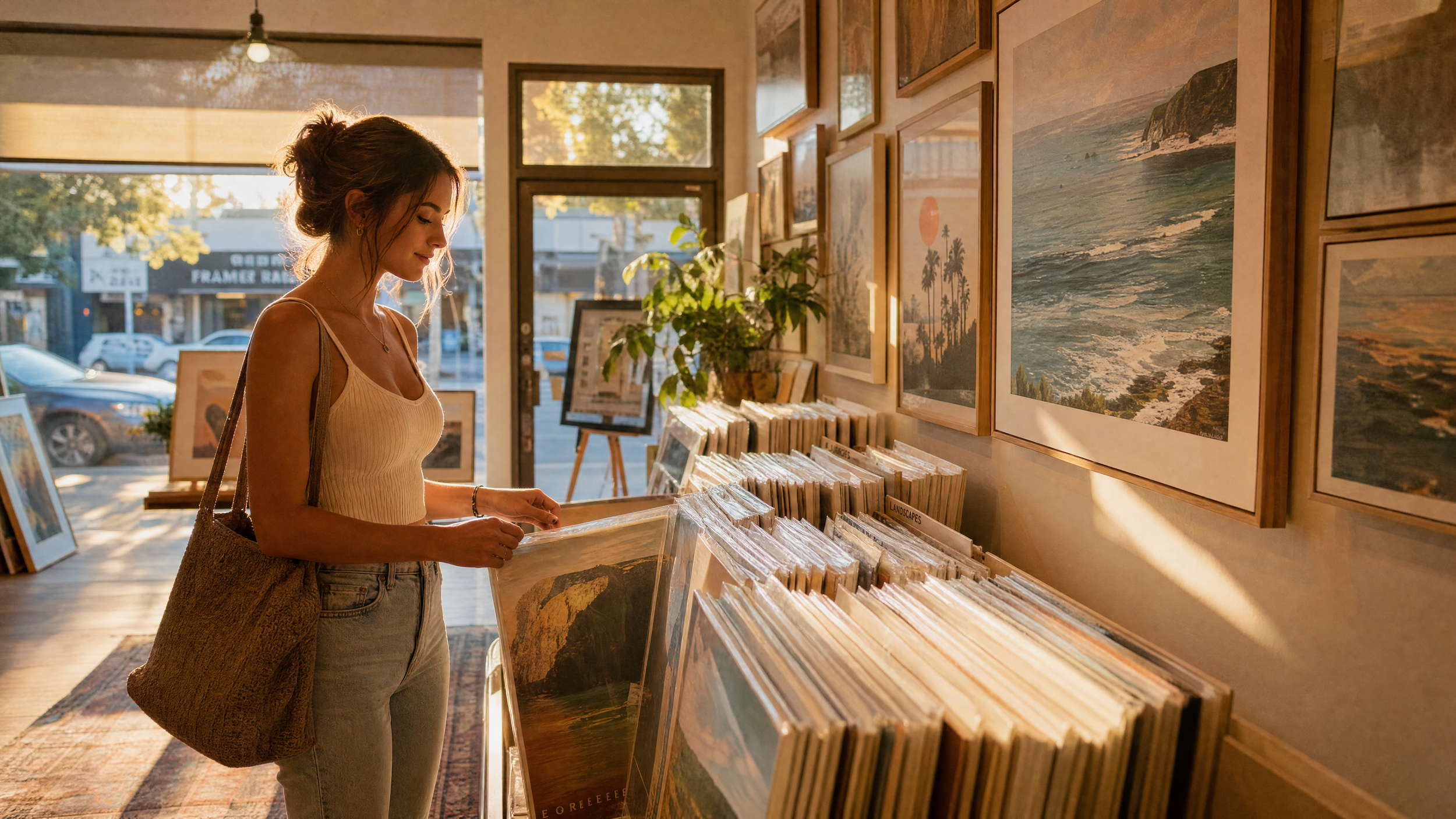
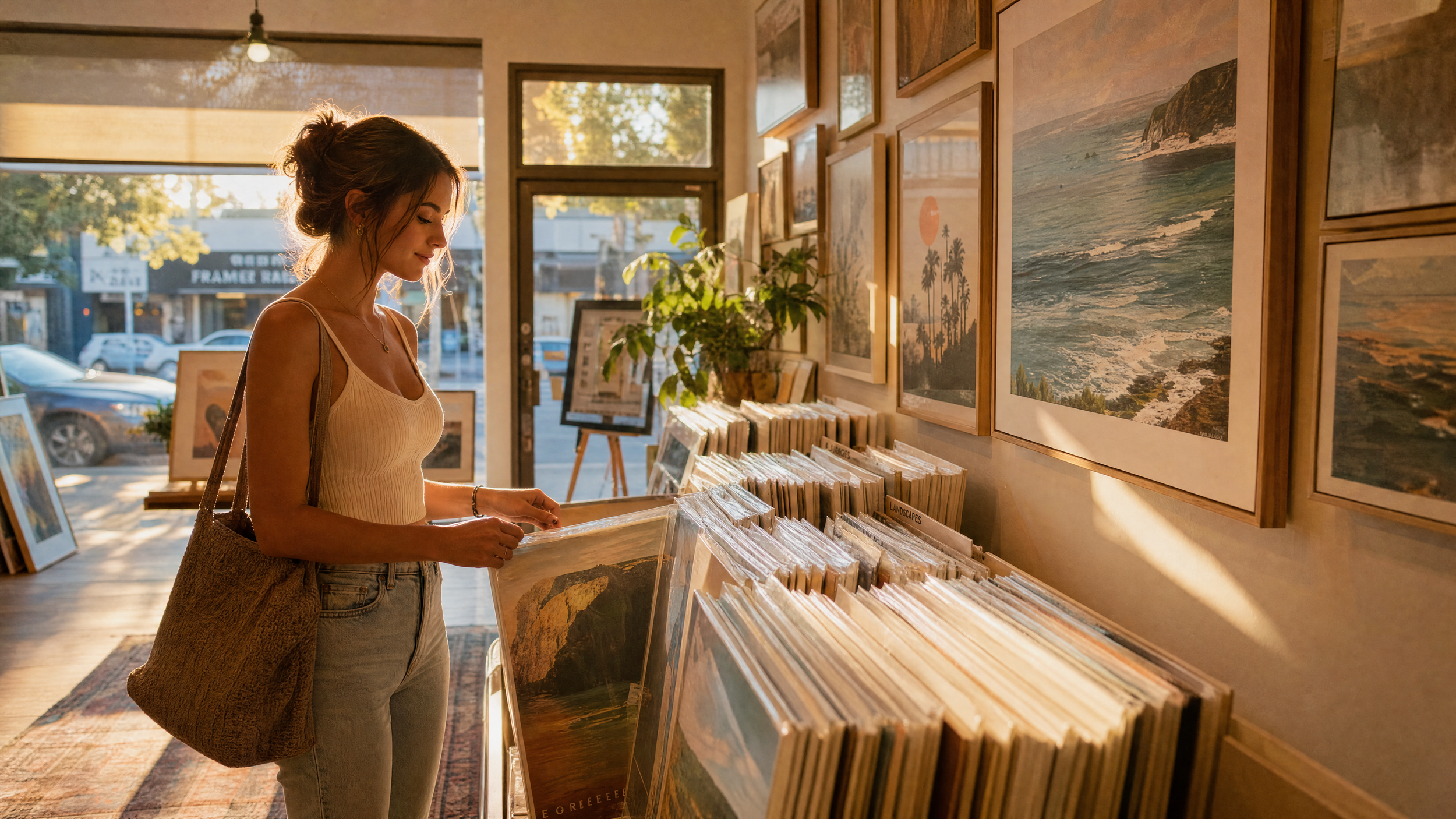
Where to Find Original Art
Today’s collectors have more access than ever before. And art is where you find it. Don’t be deterred from finding it in unexpected places. Curating is an exercise in subtle, consistent seeking. Always keep an eye out. Excellent sources include:
Local Galleries
Gallery relationships often provide access to artists before they become widely collected.
Art Fairs
These offer exposure to numerous artists and mediums in a single setting.
Museum Benefit Auctions
Many museums host fundraising events featuring emerging and established artists.
Open Studio Tours
Collectors can meet artists directly and gain insight into their process.
University Art Programs
Graduate exhibitions often showcase remarkable emerging talent before prices climb.
Travel
Some of the most meaningful acquisitions come from places that hold personal significance.
A piece purchased during a memorable journey often carries emotional value that far exceeds market value. This is a great example of how emotional connection deepens personal value and the stay-power of a piece. Artwork without heartstrings won’t stand the test of time at home.
Understanding Value
The question isn’t always, “Will this appreciate?” While investment potential can be a consideration, collecting solely for appreciation often leads to disappointment. The most rewarding collections balance passion with discernment. Instead, consider:
Is the work original?
Does the artist have an established body of work?
Is the artist actively exhibiting?
Is provenance documented?
Is the piece professionally framed and preserved?
Would I still love this if it never increased in value?
Leave Room for Evolution
Perhaps the most important lesson seasoned collectors learn is that collections are never truly finished. Tastes mature. Interests shift. New artists emerge. Pieces are moved, reframed, or occasionally sold. Evolution is a key component of the curation process.
The goal isn’t perfection. It’s creating a collection that grows alongside you. A thoughtfully curated collection should feel less like a showroom and more like a biography—one told through color, texture, memory, and discovery.
Five Questions to Ask Before Buying
Would I love this if nobody else saw it?
Can I envision where it will live?
Does it add something new to my collection?
Am I buying it because I love it or because it’s trending?
Will I still enjoy living with it ten years from now?
The journey from collection to curation is one of intention. A collection simply gathers objects, while curation reveals perspective. It is built thoughtfully over time through emotional connection, discerning choices, varied mediums, and an openness to evolve. Rather than chasing trends or filling empty walls, seek works that reflect where you’ve been, what moves you, and how your story continues to unfold. In the end, the most compelling art collections aren’t measured by their monetary value or size—they’re remembered for the lives they quietly chronicle.
Editorial Director Lauren Barisic