
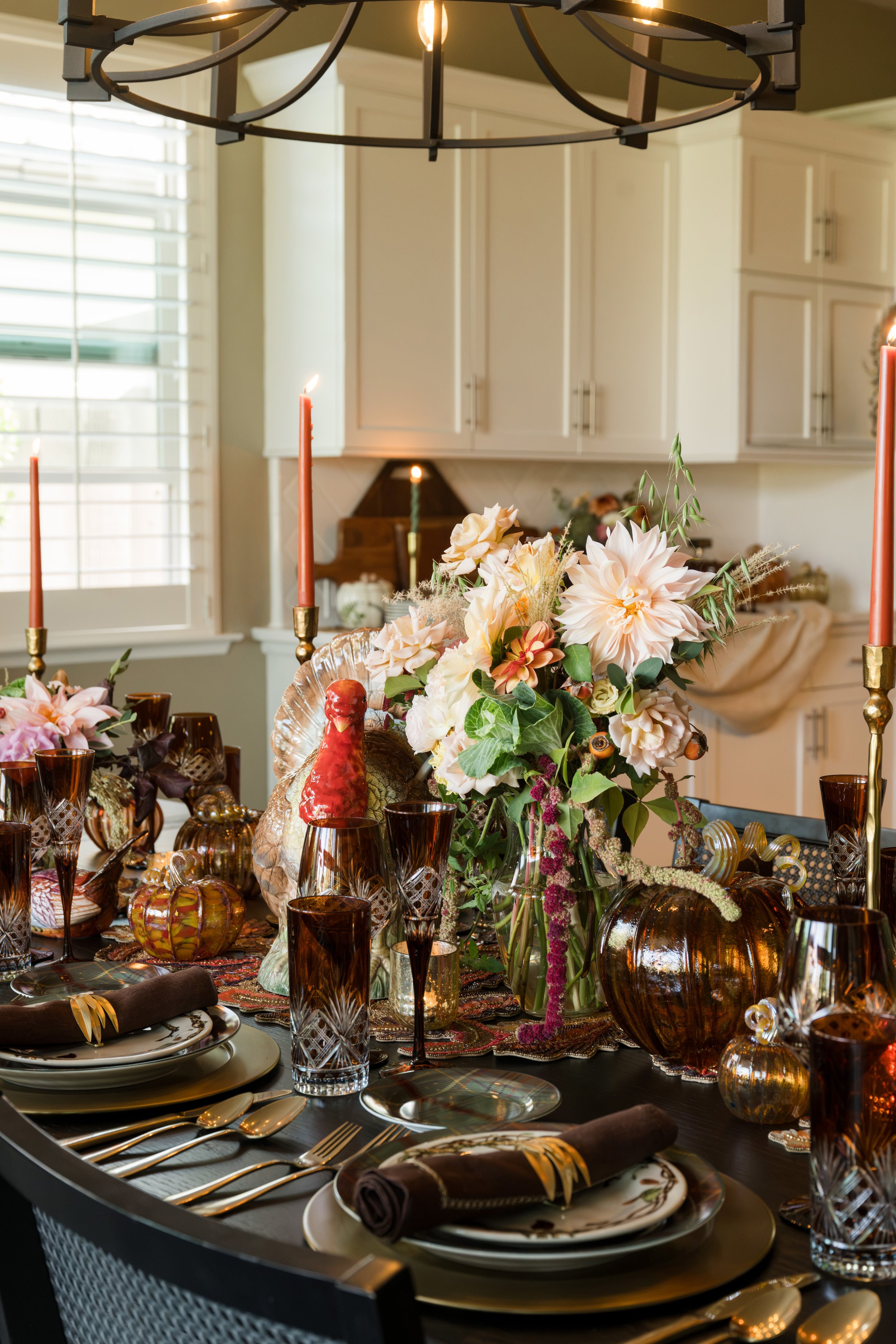
HARVEST BY DESIGN
Thanksgiving has always been an invitation to gather, but the table itself has a way of becoming part of the tradition. It is where recipes are passed, glasses are raised, stories resurface, and another year of memories quietly joins those that came before it. Setting it beautifully need not mean setting it perfectly. In fact, the most compelling tables are often those that feel collected rather than coordinated, layered with pieces accumulated over time, objects brought out only for the season, and a few unexpected additions that make the occasion feel new again.
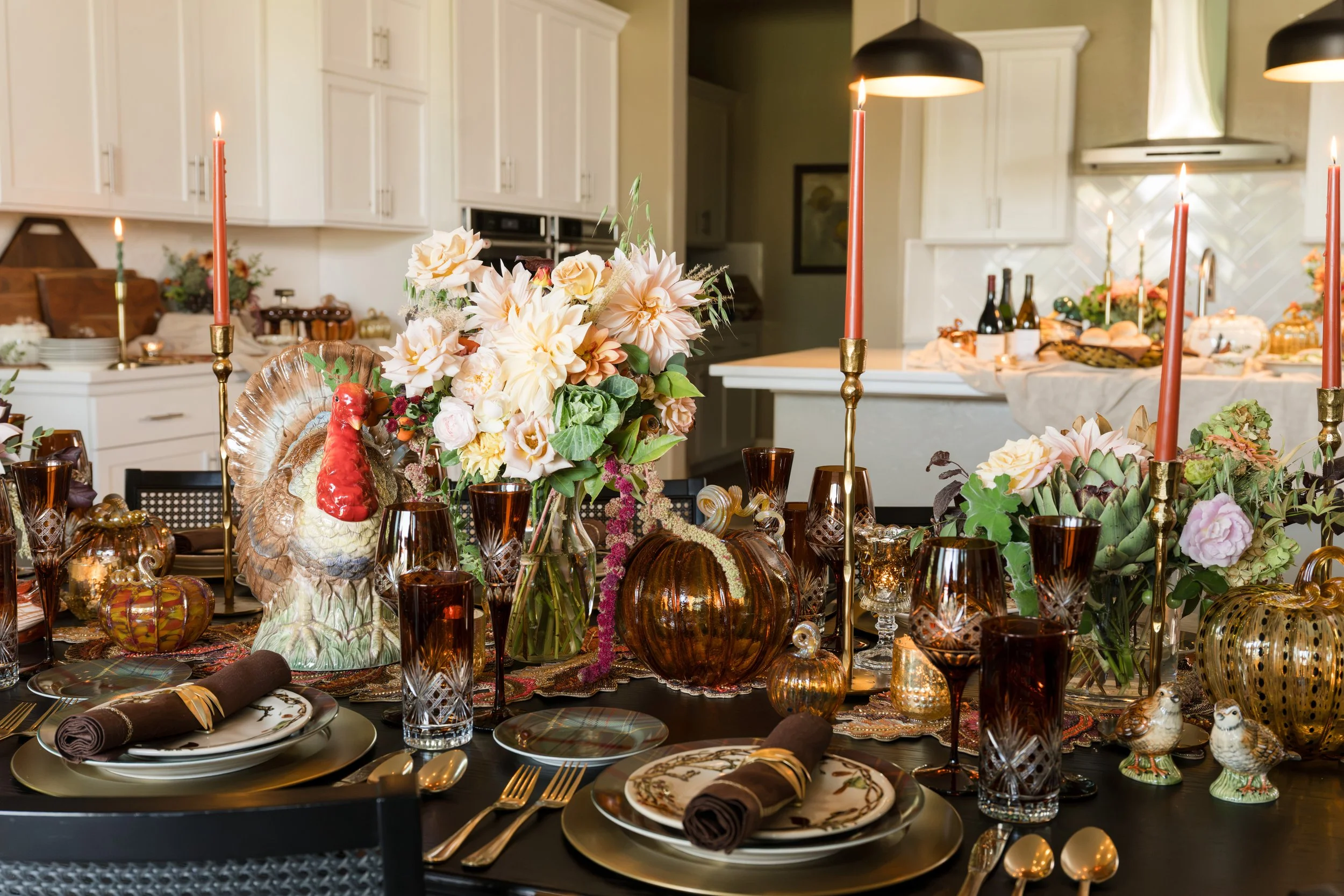
Begin with a color story. Establishing a palette before pulling everything from the cupboard creates cohesion without requiring every element to match. Autumn naturally lends itself to warmth, but there is no need to limit the table to conventional orange and brown. Tobacco, oxblood, moss, plum, ochre, and antique brass can mingle with softer notes of blush, cream, and faded green. Even a darker table can provide a dramatic foundation, allowing flowers, candlelight, and metallic finishes to emerge with greater depth.
Once the palette is established, build the table in layers. Think beyond color to material and finish: crisp or loosely woven linens against polished flatware, translucent glass beside substantial ceramics, glossy surfaces juxtaposed with natural foliage. A table becomes visually interesting when the eye has somewhere to travel. Chargers anchor each place setting, plates introduce pattern or texture, folded napkins soften the composition, and glassware adds height and sparkle.
This is also where the freedom to mix becomes invaluable. Thanksgiving is not the occasion to worry that every plate belongs to the same set. Pair your grandmother’s china with contemporary chargers. Bring patterned salad plates into an otherwise restrained setting. Mix crystal with colored glass or vintage goblets with simpler stemware. Old and new give one another context, and a table assembled this way often feels far more personal than one purchased all at once.
The same principle applies to glassware. Providing several vessels at each place setting (perhaps a water glass, wineglass, and smaller cocktail or cordial glass) immediately gives the table a sense of abundance. They need not be identical. Repeating a color, cut, material, or general silhouette is often enough to make disparate collections feel intentional together. Then consider what happens between the place settings.
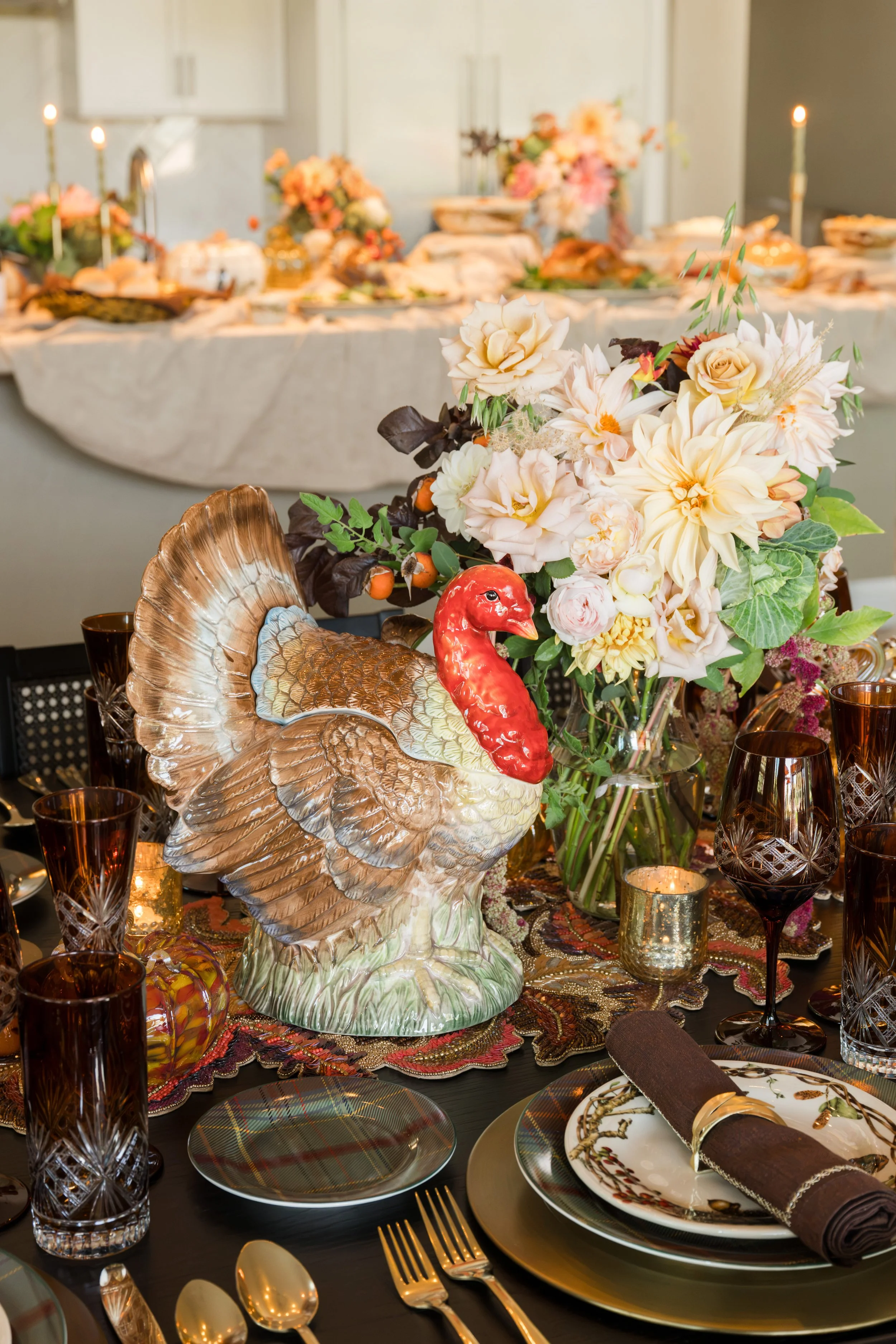
Flowers are an obvious focal point, but scale matters. Thanksgiving is a meal meant for conversation, and guests should never have to peer around an arrangement to see the person across from them. Keep substantial florals low enough for comfortable sightlines, or use taller, airier stems that leave visual space beneath them. Rather than relying on one enormous centerpiece, consider several arrangements of varying sizes woven along the length of the table.
Candlelight should be treated with the same sense of variation. Slender tapers bring height and elegance, while votives cast their glow closer to the table. Used together, they create pools of light at different levels, which is a far moodier and more flattering effect than a single source. Metallic candlesticks, etched glass votives, and tapers in a color pulled from the table’s palette can become decorative elements in their own right. As dinner approaches, dim the overhead lighting and allow the candles to do much of the work.
Perhaps the most charming additions, though, are those that serve no practical purpose at all. Thanksgiving is particularly well suited to festive collectibles. Ceramic turkeys, glass pumpkins, small silver pheasants, vintage salt cellars, sculptural gourds, and other seasonal curiosities give the table personality. A statement fowl tucked among the flowers can be every bit as impactful as another arrangement. These are the pieces children remember seeing each year and adults eventually associate with home. Collected slowly, they become part of the visual vocabulary of the holiday.
The trick is to incorporate them rather than simply place them. Nestle a figurine into greenery, repeat small pumpkins between candlesticks, or allow an heirloom object to become the centerpiece around which newer pieces are arranged. When objects overlap slightly and décor moves naturally between florals, candles, and place settings, the entire table reads as one composition.

Resist the temptation to save everything precious for “someday.” Use the china. Polish the silver. Pour wine into the crystal. Layer an inherited serving piece beside something found last week. A beautiful table gains meaning through use, and Thanksgiving offers perhaps the best excuse of the year to open the cabinets and bring treasured things back into circulation.
Most importantly, leave room for the meal and for the people gathered around it. A successful tablescape should feel generous rather than crowded, considered rather than contrived. Set the table early enough to enjoy the process, then edit. Remove anything that obstructs a serving dish, crowds a place setting, or interrupts conversation. The objective is not perfection. It is atmosphere.
Layer color, texture, history, and a little whimsy until the table feels unmistakably your own. Because long after the plates have been cleared and the last candles have burned low, what remains is not whether everything matched. It is the feeling of having gathered beautifully and the people who were there to share it.
Editorial Director Lauren Barisic
Photographer Ellie Koleen
