ORGANIC ARCHITECT
The Living Legacy of Arthur Dyson
Some architects leave behind buildings. Others leave behind ways of seeing. For more than six decades, Arthur Dyson has done both. From his Fresno studio, Dyson has quietly built a body of work that has shaped the architectural identity of the Central Valley while influencing conversations about organic architecture around the world. His buildings are immediately recognizable—not because they follow trends, but because they resist them.
Sweeping rooflines. Walls of glass that dissolve into the landscape. Spaces that breathe with light instead of simply containing it. Every project begins with a singular premise: architecture should belong to the place it inhabits. That belief has earned him international recognition, but perhaps more remarkably, it has allowed one of America’s most respected architects to remain rooted in the very region he has spent a lifetime elevating.
For Dyson, great architecture has never required a metropolitan address. It requires purpose. “We chose to make Fresno our home not because it sits at the center of our work, but because it has become the center of our lives. Over the years, we’ve built enduring friendships with people whose character reflects the very best of the Central Valley—grounded, honest, humble, and deeply authentic. Those relationships have given us a profound sense of belonging and continue to enrich both our personal lives and our professional perspective.”
Born in 1940, Dyson’s fascination with architecture was shaped as much by what he didn’t see as what he did. The buildings surrounding him were functional, but they lacked warmth, movement, and imagination. Much of the era’s architecture favored rigid forms, sharp angles, and industrial materials—practical by design, yet often disconnected from the people who inhabited them. Dyson envisioned something different: architecture that felt alive, expressive, and intrinsically connected to its environment.
That vision found extraordinary direction at just nineteen years old, when he began working alongside Frank Lloyd Wright on the legendary architect’s final commissions, including the Marin County Civic Center and the Guggenheim Museum. It was a rare apprenticeship during one of American architecture’s most defining moments, introducing Dyson to the principles of organic architecture and the belief that buildings should emerge naturally from their surroundings rather than compete with them.
His education continued under celebrated architects Bruce Goff and William Gray Purcell, each adding another layer to his understanding of architecture as an extension of both nature and the human experience. Yet while Wright’s influence is undeniable, Dyson never became a disciple of another man’s vision. Instead, he cultivated an architectural language entirely his own—one rooted in movement, light, and a profound respect for place.
That understanding of place, however, was shaped by more than architectural mentorship. Dyson credits Indigenous perspectives on the landscape with deepening his belief that meaningful design begins not by imposing ideas upon a site, but by listening to it. As one respected Elder told him years ago, “If you observe, and if you listen to the land, it will reveal its secrets.” Those words have remained one of the guiding principles of his practice, reinforcing his conviction that every landscape possesses its own history, rhythm, and wisdom—qualities revealed only through patience, humility, and careful observation.
As he established his Fresno practice, Dyson challenged convention with buildings that felt as though they had grown from the landscape itself. Earth rose into sculpted berms. Concrete curved instead of conformed. Skylights and translucent domes ushered daylight deep into interiors, while wood became both structure and sculpture, bent into expressive forms that animated each façade. His work rejected the cold precision of modernism in favor of spaces that felt welcoming, intuitive, and alive.
Over the course of his remarkable career, that philosophy would shape an extraordinary body of work across the Central Valley and beyond. From thoughtfully integrated residences throughout the region to civic, educational, religious, and commercial landmarks—including the Woodward Regional Library, University High School, Fresno Betsuin Buddhist Temple, and the iconic Palm Avenue Interior Systems remodel—Dyson’s designs have become part of the Valley’s architectural identity. Each reflects his enduring belief that buildings should not simply occupy a space, but respond to and enrich the communities they serve. His buildings are not monuments standing apart from their communities—they are places where life unfolds.
This is arguably the greatest measure of Dyson’s success. The most enduring architecture doesn’t demand attention—it earns belonging. Students have learned beneath his roofs. Families have marked life’s milestones within his homes. Communities have gathered, reflected, celebrated, and connected in spaces designed not simply to shelter them, but to enrich their experience of the world around them. His architecture possesses that rare quality. It feels inevitable, as though it has always belonged exactly where it stands. “Architecture should not be an expression of the architect’s ego, but an articulation of the lives, aspirations, and experiences of those who inhabit it,” Dyson understands.
Although his practice has remained firmly anchored in Fresno since opening in 1969, Dyson’s influence extends far beyond California. His work has been exhibited internationally, published extensively, and recognized through dozens of regional, national, and international design awards. Licensed in multiple states and celebrated throughout the architectural community, he has consistently demonstrated that exceptional design can originate anywhere, and that geographic location is never limits visionary thinking.
Perhaps one of his most enduring contributions lies not in the buildings themselves, but in education. From 1999 to 2002, Dyson served as Dean of the Frank Lloyd Wright School of Architecture at Taliesin, later becoming Dean Emeritus. In doing so, he became both steward and teacher of one of architecture’s most influential educational legacies, helping guide future generations while preserving the principles that first inspired him as a young apprentice four decades earlier.
It is a remarkable full-circle moment. The apprentice became the educator. The student became the guardian of a philosophy. Yet Dyson is the first to reject the notion that mastery is ever complete. He often jokes that he remains an “architect in training,” a remark rooted in genuine humility and a lifelong belief that meaningful design demands continual curiosity, reflection, and growth.
Yet even as his influence expanded internationally, Dyson never lost sight of home. His longstanding involvement with California State University, Fresno, local arts organizations, preservation efforts, housing initiatives, and numerous community organizations reflects a belief that architecture is ultimately an act of public service. Buildings shape cities, but architects shape communities through empathy, stewardship, and civic engagement. That commitment has made Dyson’s legacy uniquely generational. His work inspires not only fellow architects but also artists, engineers, students, and young designers throughout the Central Valley who see in his career proof that world-class creativity can flourish close to home.
In many ways, Dyson’s greatest accomplishment has been demonstrating that architecture is less about constructing buildings than cultivating relationships—between people and place, history and innovation, nature and design. Over six decades, he has expanded the philosophy of organic architecture for a changing world, drawing not only from Frank Lloyd Wright’s teachings, but also from Indigenous wisdom, environmental science, and an ever-deepening understanding of how thoughtfully designed spaces influence the human experience. His work is not an echo of Wright’s legacy. It is its evolution.
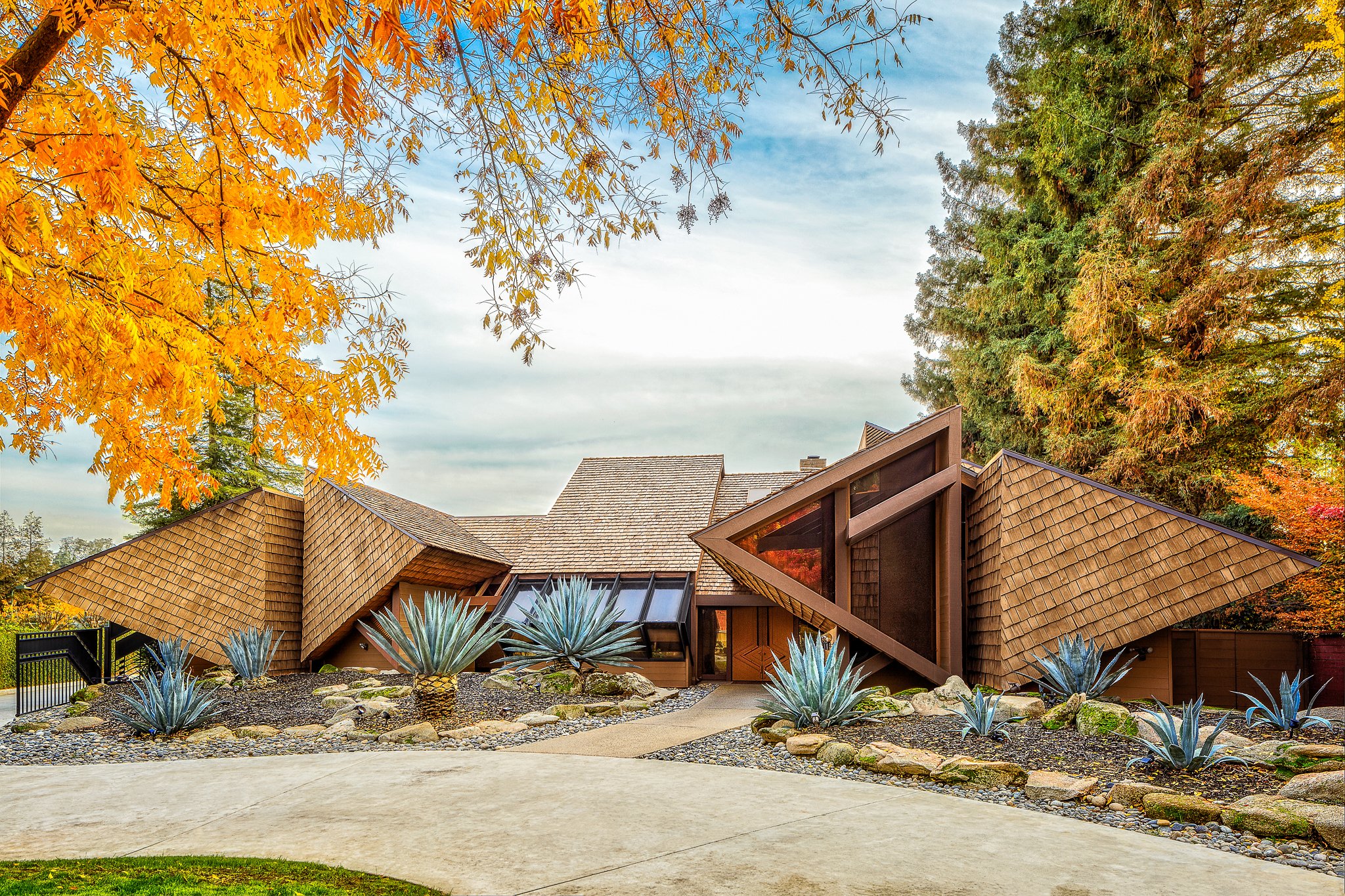
Those relationships are increasingly valuable in a world that often prioritizes speed over permanence. Dyson’s architecture asks us to slow down—to notice how sunlight shifts across a wall, how a roofline frames the sky, how natural materials soften with time, and how thoughtfully designed spaces quietly shape the way we gather, learn, worship, and live. His buildings remind us that beauty is never merely decorative. Rather, it enriches the quality of everyday life.
Dyson has long championed the principles of organic architecture, a philosophy he believes is more relevant today than ever before. “Organic architecture is not an architectural style but a philosophy that emphasizes harmony between people, buildings, and nature. As the world seeks more sustainable ways to live, its principles offer practical and enduring solutions that can help create healthier, more resilient, and environmentally responsible communities for future generations.”
There is a tendency to measure an architect’s success by skyline-defining towers or headline-grabbing commissions. Arthur Dyson’s career offers another metric entirely. Measure it by communities strengthened. By students inspired. By landscapes respected. By buildings that continue serving people decades after their completion with the same quiet grace that first brought them to life. His influence is visible not because it demands attention, but because it has become part of the cultural fabric of the Central Valley itself.
For Dyson, architecture has always extended beyond the buildings themselves. He believes thoughtful design begins with understanding the communities it serves—a philosophy reflected not only in his work, but in his lifelong commitment to civic engagement. Throughout his career, he has generously dedicated his time and expertise to nearly forty professional, educational, cultural, and community organizations, recognizing that meaningful architecture is born from meaningful participation.
That dedication, paired with more than six decades of visionary design, has earned Dyson widespread acclaim, including more than 120 honors from architectural and cultural institutions. In 2023, the Fresno Art Museum celebrated his remarkable legacy with Arthur Dyson: Organic Architect, A Retrospective 1960 to Present, a comprehensive exhibition spanning sixty-three years of his career. Through architectural models, renderings, and original works, the exhibition offered visitors an intimate look at the evolution of one of the Central Valley’s most influential creative minds, marking his first major exhibition there since Poetics of Space in 2004.
Dyson believes the greatest buildings do far more than shelter us. They become vessels for memory, connection, and discovery, quietly reminding us that “beauty is not an indulgence but a fundamental human necessity.” Through proportion, craftsmanship, natural light, and a profound respect for place, architecture possesses the extraordinary ability to elevate the human spirit while inspiring a deeper appreciation for the world around us.
As the region continues to evolve, so too does the significance of those who helped define its visual identity. Dyson’s work stands as a reminder that architecture is ultimately an expression of optimism—a belief that thoughtful design can improve how we experience the world around us.
From a young apprentice working alongside Frank Lloyd Wright to one of the nation’s foremost voices in organic architecture, Arthur Dyson has spent a lifetime proving that extraordinary ideas can take root anywhere. More importantly, he has demonstrated that the most enduring architecture begins not with an architect’s vision, but with a deep respect for the land, the people, and the stories already present.
Sometimes, the world’s most enduring ideas aren’t born in its largest cities, but in the communities willing to nurture them. For Arthur Dyson, that place has always been the Central Valley. “Timelessness is not achieved by resisting the passage of time, but by embracing universal principles that transcend it: proportion, light, material honesty, craftsmanship, and a profound respect for place.”
Selected Works
The Central Valley is home to numerous celebrated Dyson projects, yet a select few rise above as exceptional expressions of his visionary approach—distinctive works that reveal the depth of his creativity, craftsmanship, and enduring influence on the region’s architectural landscape.
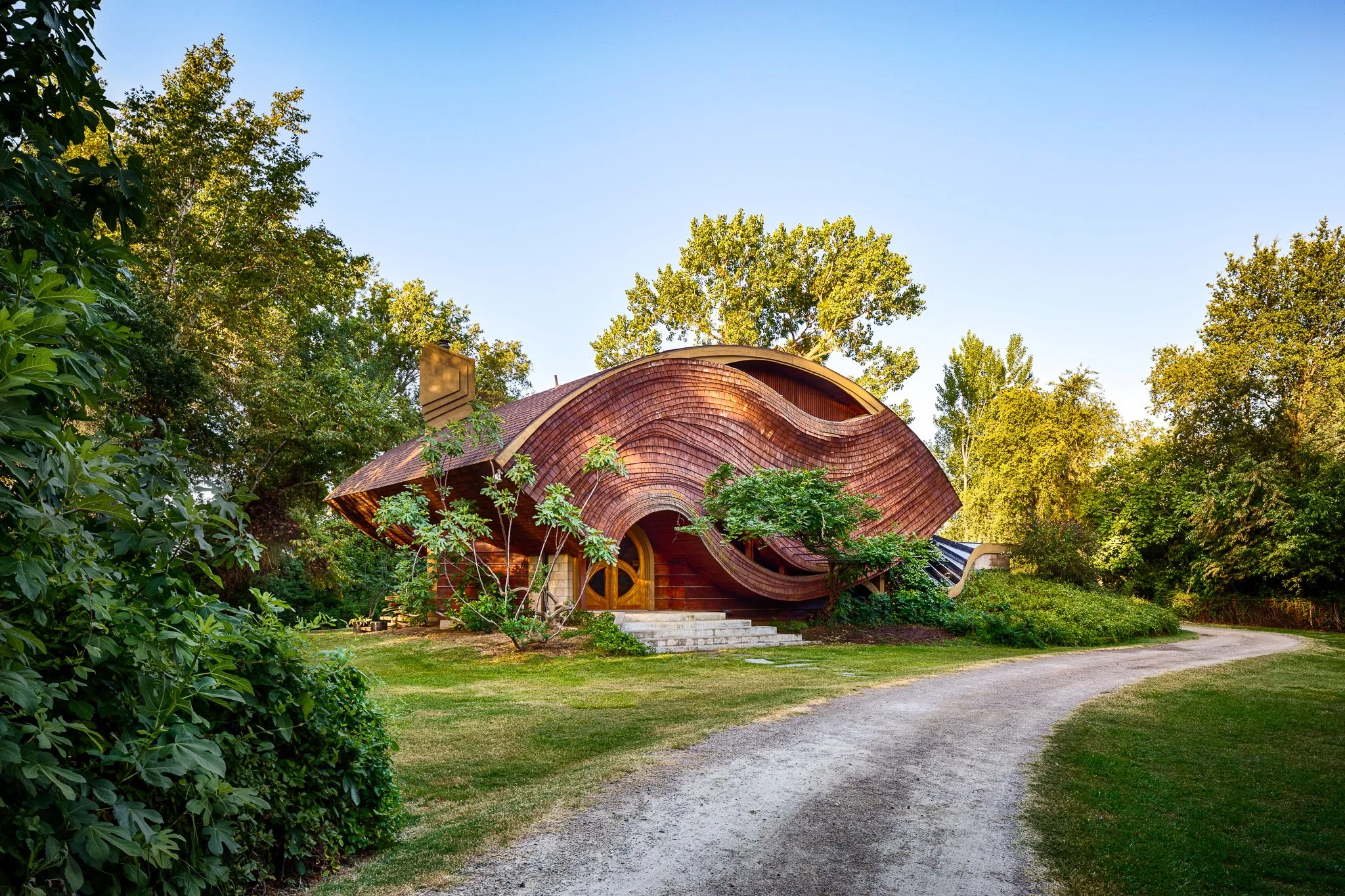
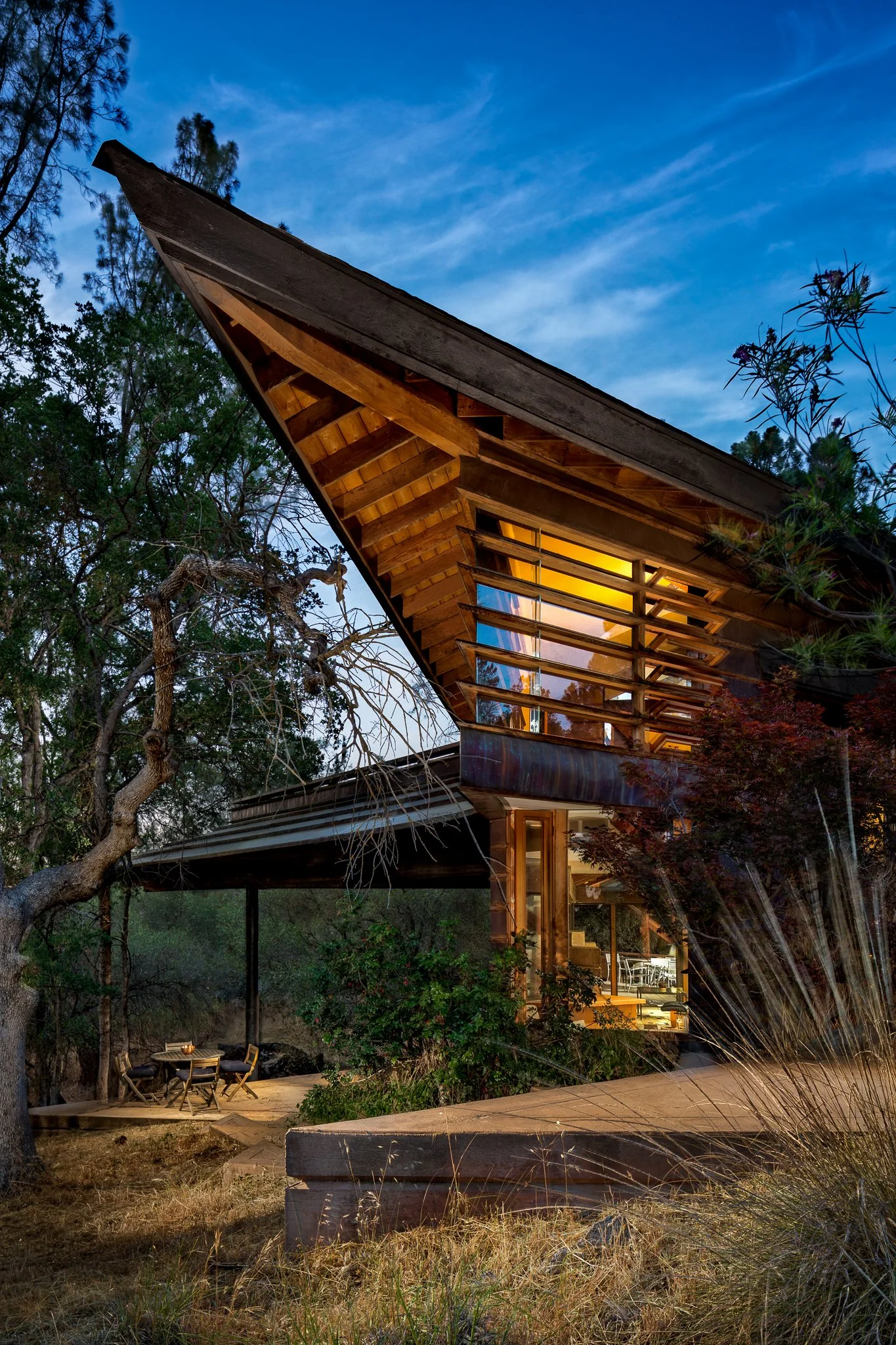
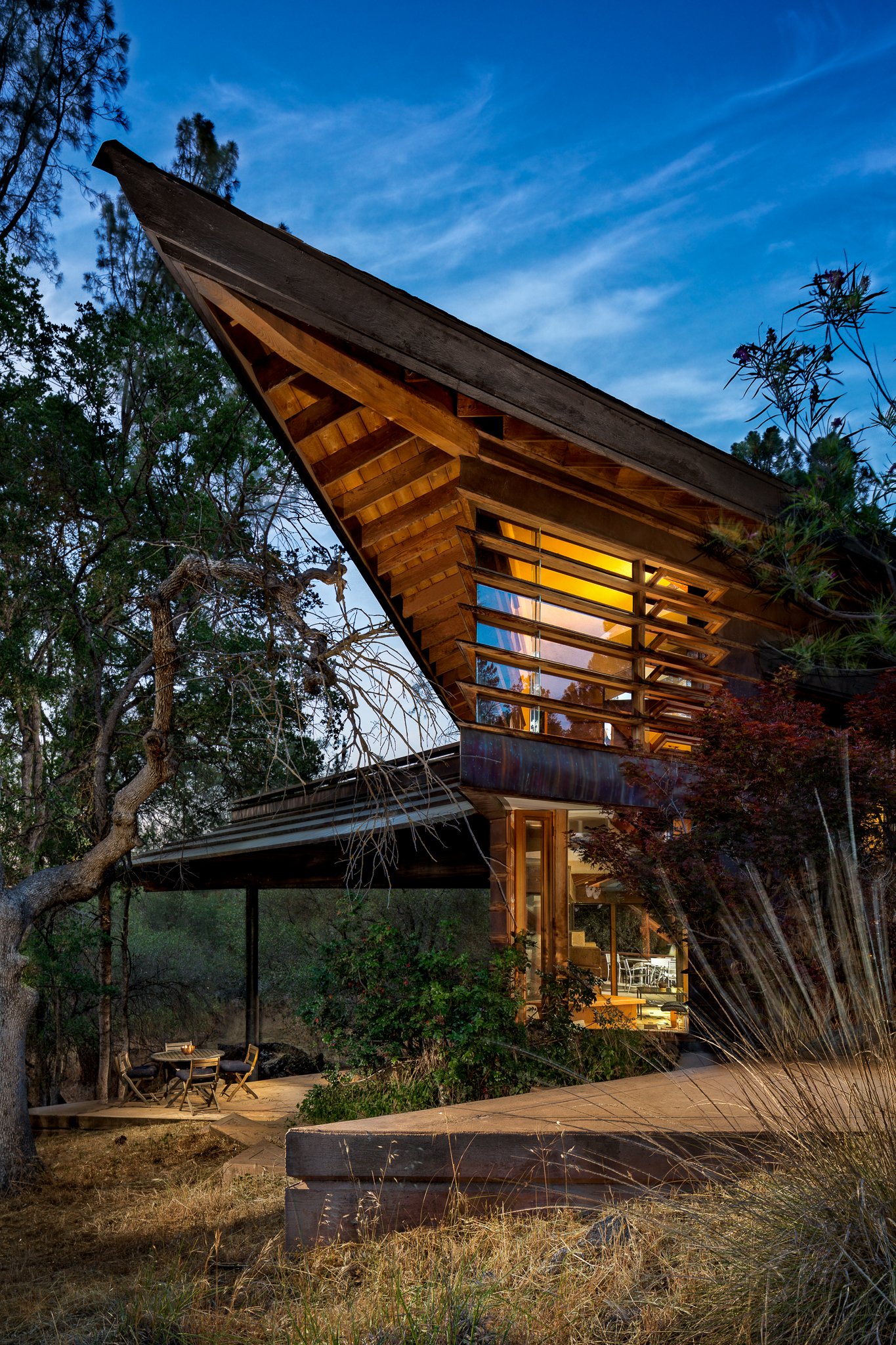
The Creek House | Sanger, California (1986)
Perhaps Dyson’s most recognizable residence, the Creek House has achieved international attention for its dramatic forms, flowing rooflines, and seamless integration with its natural setting. It has become an icon of contemporary organic architecture and continues to captivate architects and design enthusiasts around the world.
“Deeply rooted in its site, the house emerges from an intimate dialogue with the surrounding landscape. Its form, materiality, and spatial experience are shaped by the rhythms of the trees, the character of the terrain, and the quiet intelligence of the natural environment. Instead of imposing itself upon the land, the architecture responds to it with restraint, allowing the existing ecology to inform every meaningful decision. In this way, the Creek House derives its identity not from spectacle, but from authenticity. It belongs unmistakably to its place and to the people for whom it was created. Its success lies not in universal appeal, but in the clarity of its purpose, a home that is profoundly personal, deeply contextual, and inseparable from the landscape that gives it life.”
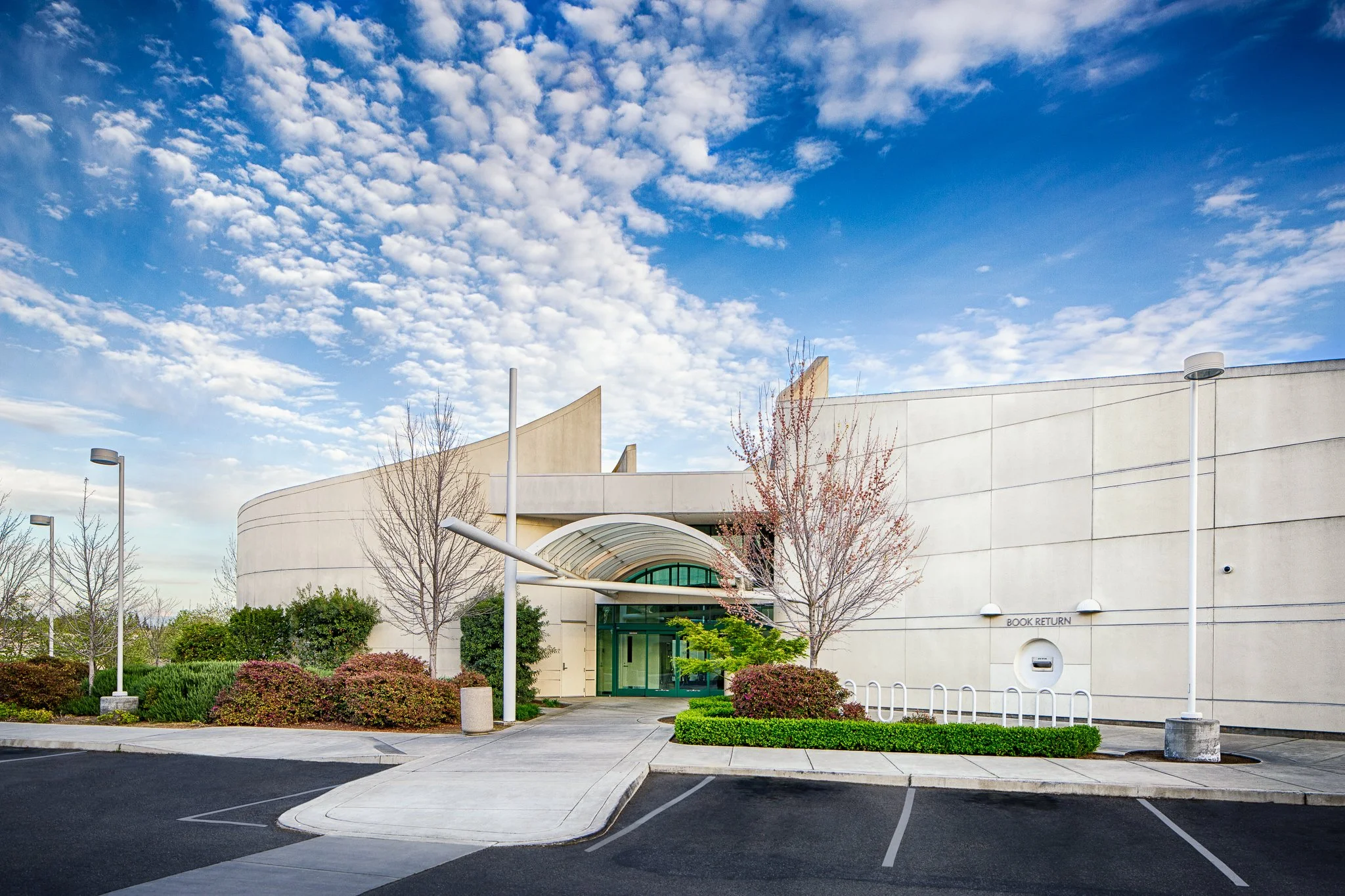
Woodward Park Regional Library | Fresno, California (2004)
Nestled alongside one of Fresno’s most beloved parks, the Woodward Park Regional Library demonstrates Dyson’s gift for creating architecture that feels connected to its environment. Filled with daylight and welcoming public spaces, it has become a gathering place for generations of Valley residents.
“The Woodward Park Regional Library emerged from a dialogue between purpose, place, and people—an exploration of the community’s aspirations, the character of the site, and the evolving role of the modern library. The design responds to the diverse needs of its users, creating distinct spaces for children, students, families, and lifelong learners while maintaining a cohesive architectural whole. Natural light became the project’s defining element—not simply an environmental strategy, but the primary design medium. As sunlight filters through the building, it brings warmth, depth, and an ever-changing rhythm to the spaces, transforming everyday moments of reading and gathering into experiences of quiet inspiration. The result is a civic landmark where architecture celebrates curiosity, knowledge, and human connection.”
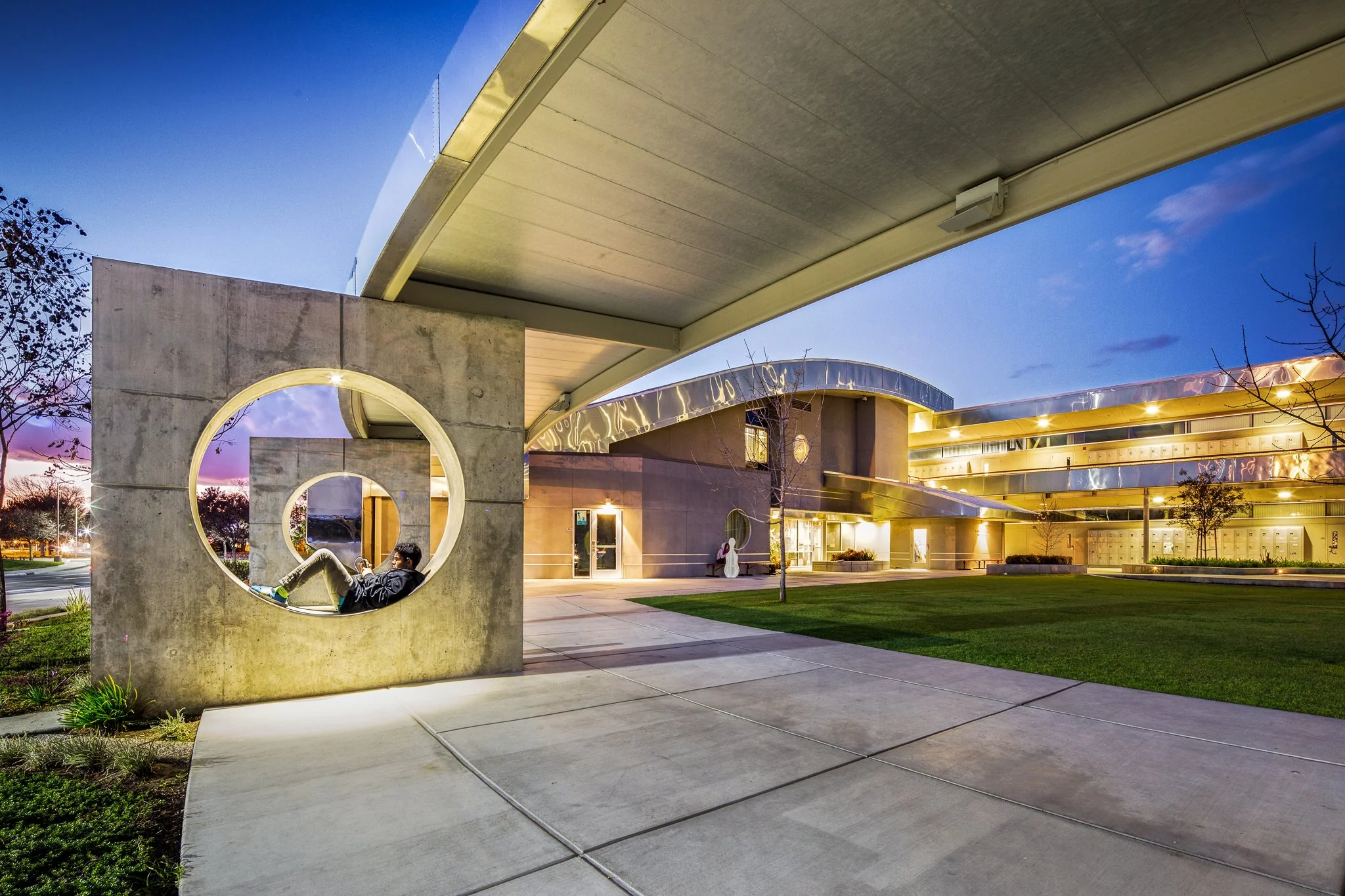
University High School | Fresno State Campus (2010)
Designed to foster curiosity, creativity, and collaboration, University High School reflects Dyson’s belief that educational environments should inspire as much as they instruct. Rather than functioning solely as places of learning, thoughtfully designed schools have the power to shape how students engage with one another, their surroundings, and the ideas that will define their future.
“The design of a school extends far beyond classrooms. It is the creation of an environment where children discover who they are, cultivate their potential, and begin to imagine who they might become. University High School was born from the conviction that educational architecture should aspire to more than efficiency. It was conceived as a living environment informed by neuroscience, environmental psychology, and child development—one that inspires learning, nurtures creativity, encourages collaboration, strengthens community, and awakens a lifelong love of discovery. When architecture recognizes children not simply as students but as future innovators, artists, leaders, and citizens, a school becomes far more than a building. It becomes a place where possibility takes root and the future quietly begins to take shape.”
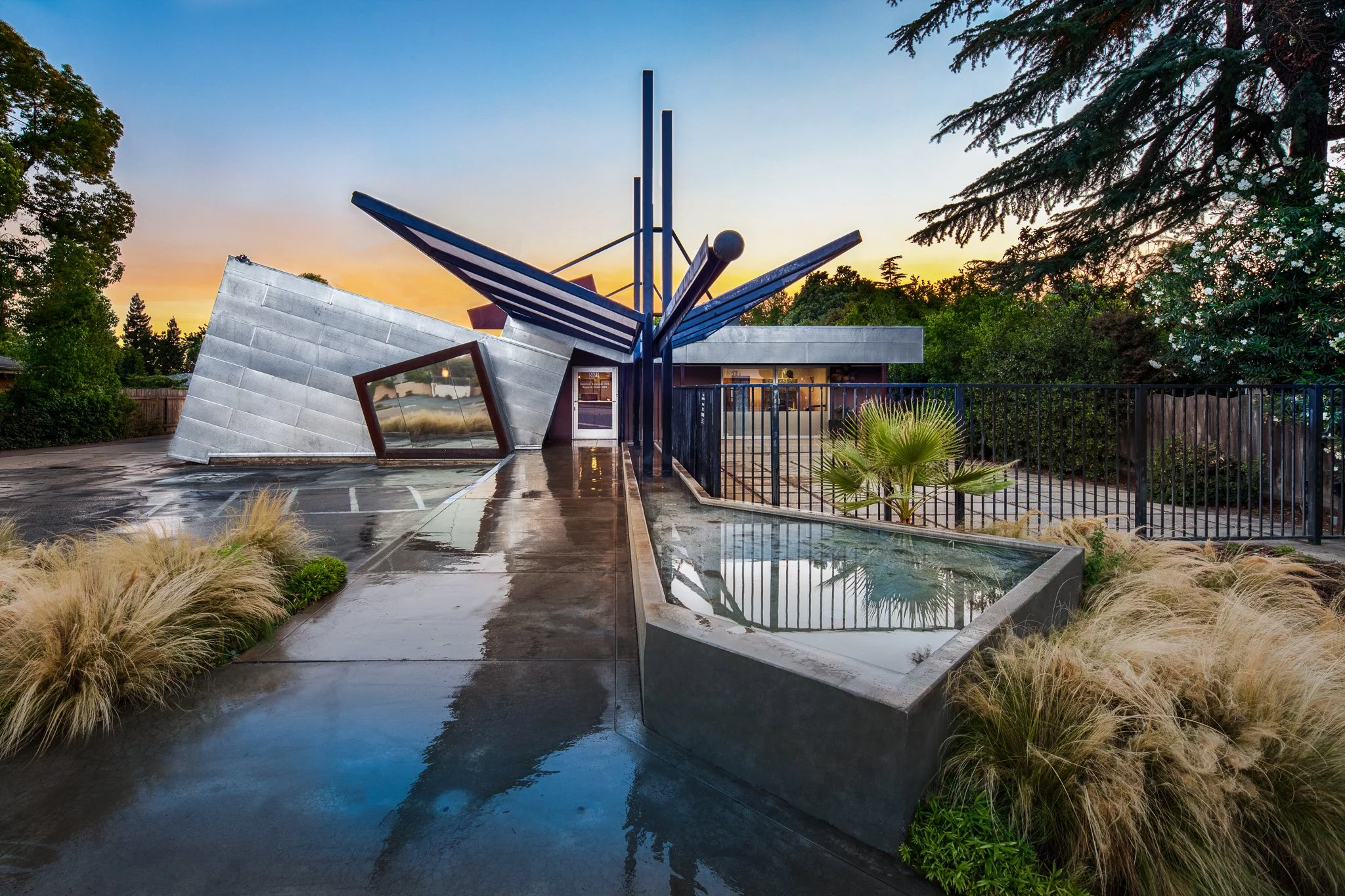
Interior Systems Remodel | Fresno, California (1995)
Perhaps one of Dyson’s most talked-about commercial designs is Interior Systems, later Hemisphere Furniture and now the Fresno Dental Works office building on Palm Avenue has become a Fresno landmark thanks to its dramatic illusion of emerging from (or disappearing into) the earth. Decades after its completion, it remains one of the city’s most recognizable pieces of contemporary architecture and a favorite subject of conversation among locals.
“The Interior Systems building began as a modest remodel with an ambitious vision and a limited budget. Originally a residence, then a dance studio, it evolved into an architectural expression of creativity rather than erasing its past. By replacing the existing roof with a dramatic pitched form that rises from an intimate eight-foot entry to a soaring fourteen-foot gallery, the design transformed both the space and its identity. A reflecting pool, expressive geometry, and thoughtful use of light and materials created a memorable presence while fulfilling the client’s desire for a durable, low-maintenance building. The project stands as proof that inspired design can transcend financial limitations, turning an ordinary structure into one of Fresno’s most recognizable architectural landmarks.”
Editorial Director Lauren Barisic
Photographer David Swann