
SIGNATURE SIPS
How to Batch Craft Cocktails for a Crowd
There’s something about this time of year that draws people together, often with a drink in hand and food on the table. And while food is foundational to sustaining any event worth attending, spirits tend to be responsible for partygoers getting into, well, the spirit. But when you’re the one hosting the event, the last thing you should be is a slave to your bar. This is where the art of batched craft cocktails becomes a party trick you’ll want to master when playing host.
Invest in Various Vessels
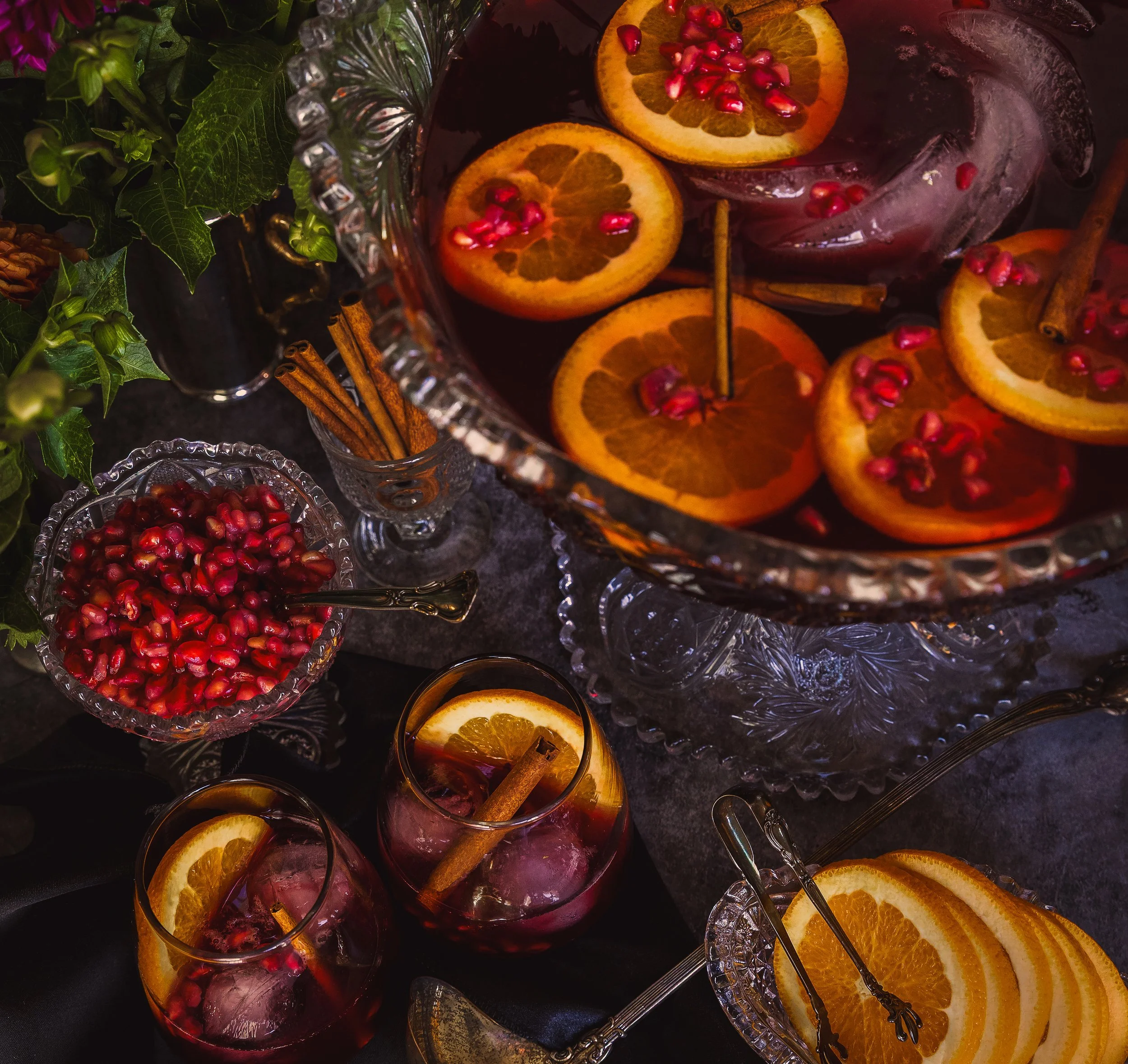
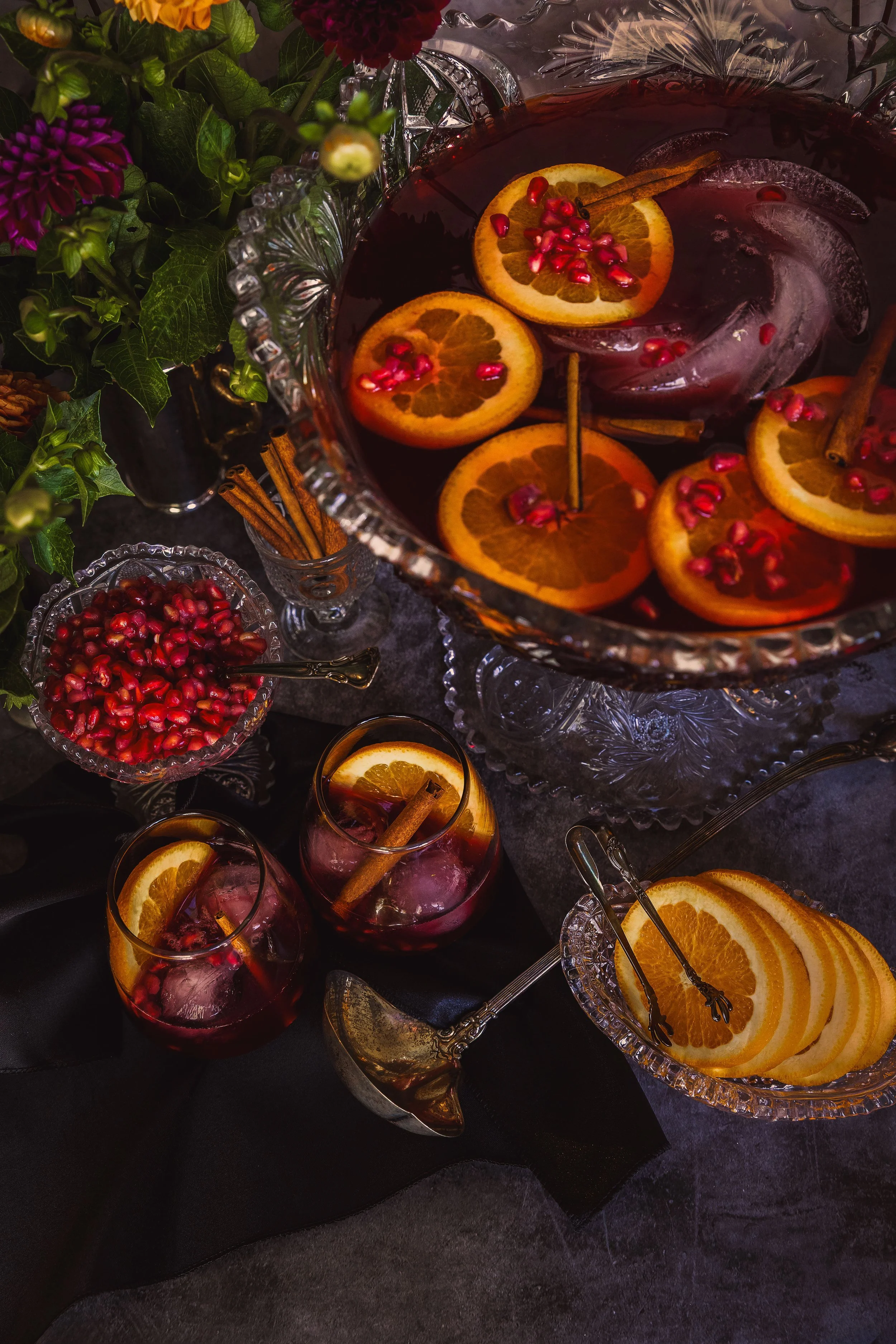
If you don’t have a punchbowl, get one. If you’re already questioning this advice, trust that this is one of those pieces that will get more action than you might anticipate. It’s pretty on display (which should inspire you to find ways to use it more), and its function doesn’t have to be limited to retaining occasional liquid contents (mine has corralled everything from decorative gourds and fruit to dog leashes and dinner rolls).
Now for the reasons why the punchbowl is the matriarch of vessels in the realm of premade libations for small- to medium-size gatherings. Firstly, it doubles as a focal point—its prime placement on the table or counter makes it easy to build out your bar setup around it. The wide-open mouth is practically begging for festive floating garnishes—another little detail that makes it look like you put way more effort into this setup than you inevitably will.
A pretty pitcher will also suffice—it’s just better to go with a clear glass option so that the contents are visible. People eat (and drink) with their eyes first, so give them something to desire. Beautiful colors, ice shadows, fruit slices or chunks, intact spices (anise stars, cinnamon sticks), herbs (rosemary sprigs, basil or sage leaves), and even whole berries become eye candy when added to the mix. Add a bowl (or two, or three) of whatever featured adornment is on display so that guests may be inspired to garnish their own glasses.
There’s a communal vibe that accompanies the punchbowl especially, and this mindset can be carried over to pitchers and even upright drink decanters. When everyone serves themselves from a common setup, the source becomes an interactive point, especially when given the need for a ladle and/or spigot. And everyone drinking “roughly” the same drink has a way of bonding the crowd. Trust that it’ll create camaraderie, which will help fuel the vibe you obviously were after by hosting a party in the first place.
Think About Function
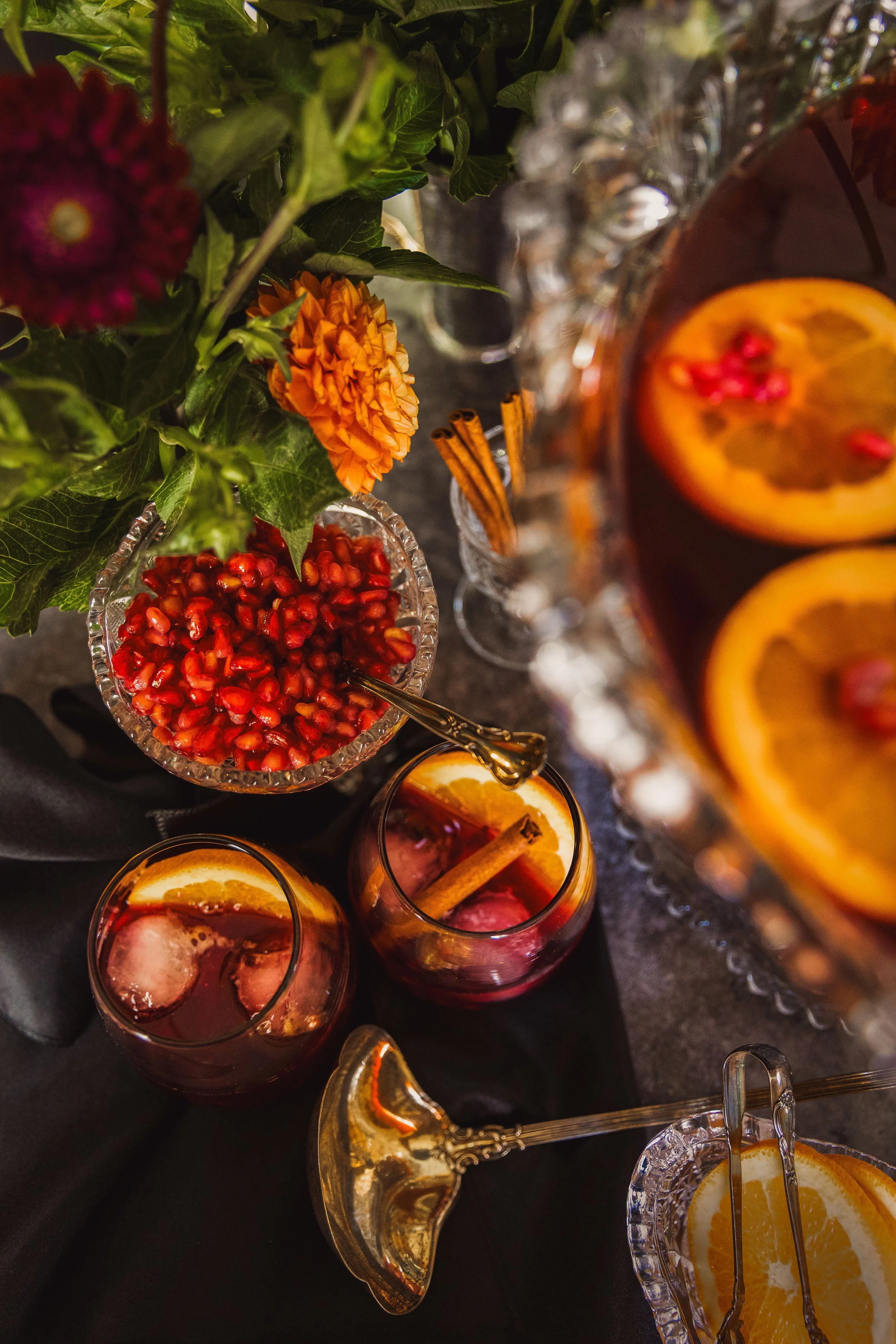
Speaking of the “roughly” part, not all punch need be spiked. Sometimes it’s even more fun to concoct a versatile alcohol-free (or only mildly boozed) base and then offer an array of spirits for guests to choose between. It’s also lovely to leave a bottle of bubbly out for anyone who likes a little fizz, and nothing says “party” like Champagne. Plus, if you pick an effervescent component (ginger ale and hard cider make excellent alternatives here), consider adding a bit of edible glitter to the mix—when sparkle meets bubbles, the result is glimmer from any glass.
If you did your job right, you’ll need to refill at some point. If you have the means to store more mix in the fridge, do so. If not, you’ll need to make it easy to recreate your recipe fast. This is where keeping ratios simple will benefit you greatly. Use your bottles as “part points” whenever possible. Here’s a favorite holiday recipe—the Fireside Royale Punch—that illustrates this concept well: ½ of a large bottle of pomegranate juice, 2 cans of blood orange ginger beer, ½ of a bottle of spiced rum, and ½ of a small bottle of Grand Marnier, floated with Champagne that is held off to the side.
Ginger beer often comes in a 4-pack, so all the ingredients above are simply halved for serving. Either hold their bottles and cans separately (in the fridge or in an ice chest concealed by the tablecloth under the serving station for easy access), or have the flat liquids mixed and ready to be added to the bubbles. Note that anything carbonated should not be premixed so as to keep the sparkle alive. Also, do not forget to have more garnishes on hand in case they’ve been severely commandeered in the self-serve process.
Garnish & Chill Smartly
A general note on garnishes: keep them simple. Nothing kills the build-your-own hype like something you struggle to build yourself. For example, if you’re serving Bloody Marys and want to have all the fixings, consider having them skewered and neatly displayed so that all your guests have to do is pick up a stalk and a stick—they should not be implored to figure out how to get all the goods attached to the rim of their glass. Same thinking for anything that goes rimside—precut the slice that makes attachment possible before setting it out.
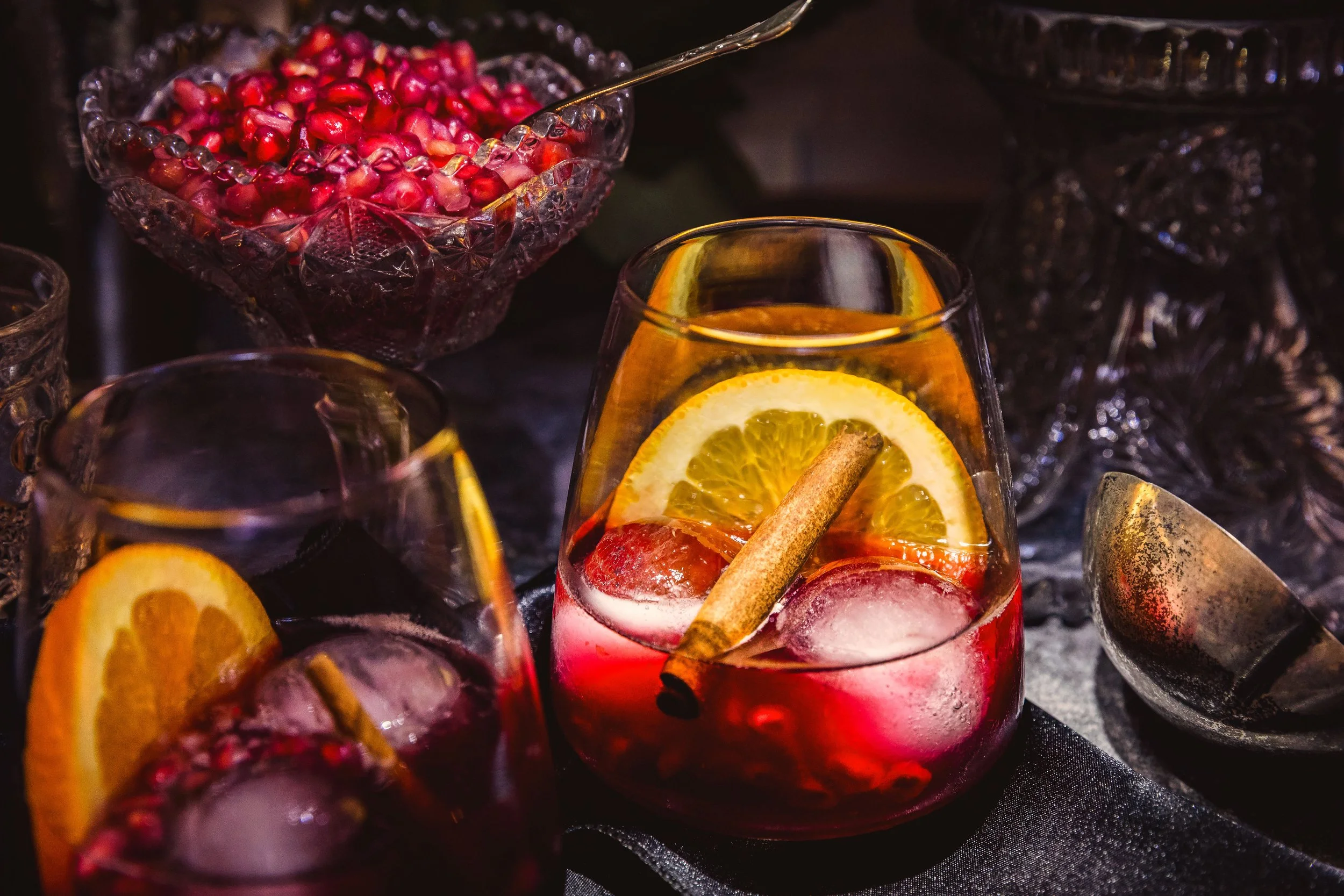
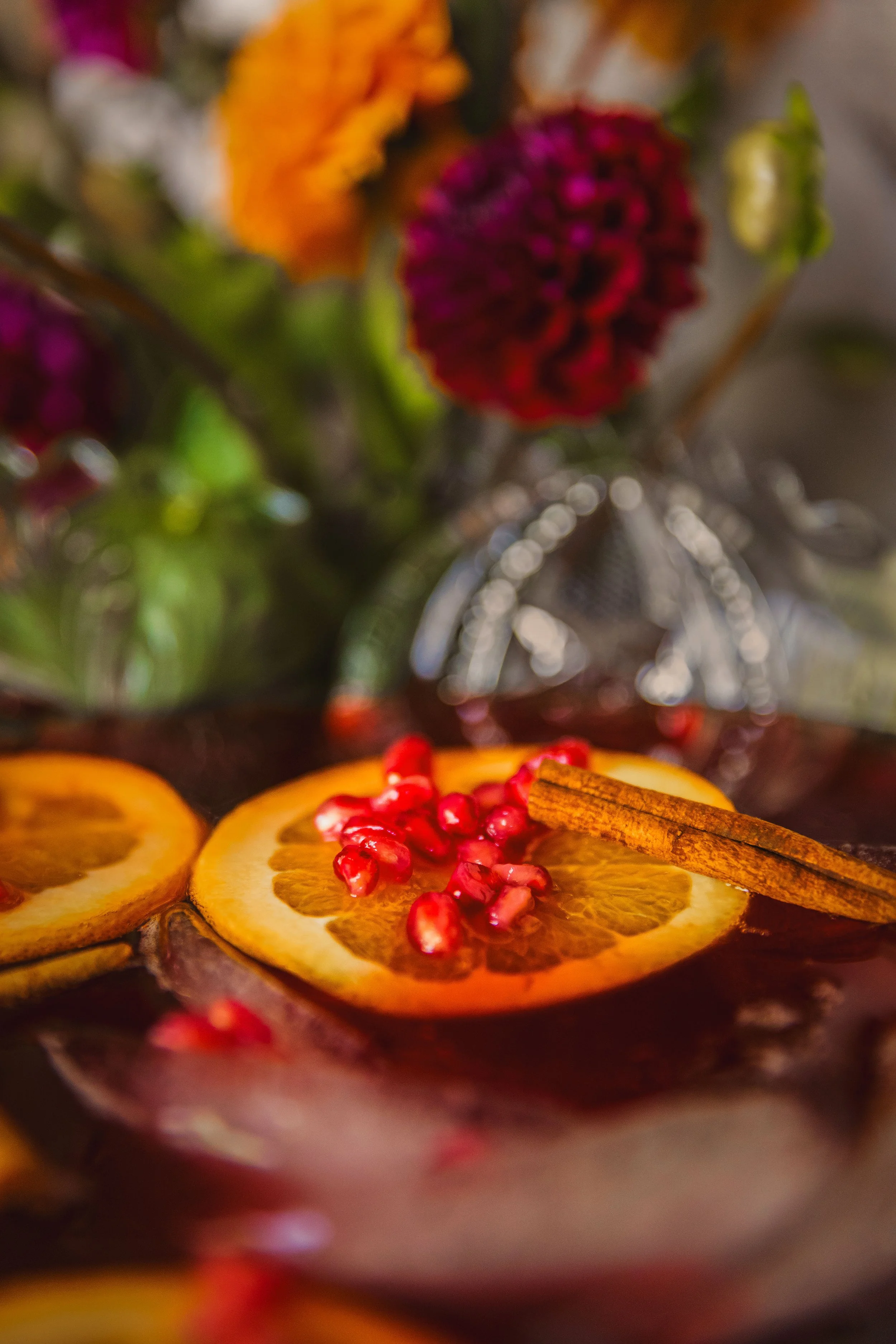
Resist the urge to load up on garnishes, as well. Nothing is more annoying than fighting a barricade of fruit, spices, and leaves that are hell-bent on acting as a tiny dam between you and your next sip. Pick one or two, maybe three—and I say maybe because I do love an orange slice, whole pom arils, and a cinnamon stick placed properly in the punch glass from the above recipe. But that’s where ice can either make or break your sip sanity.
Ice! There are a couple of fun methods available here. For the punchbowl concept, a giant ice block functions ideally (since it’ll melt at a slower rate than ice cubes), and it’s an opportunity to add some panache to the presentation. Try freezing a Bundt cake pan filled with water—just dip the exterior in warm water to release the ice mold and place it in your punchbowl before adding the main event. For pitchers or decanters, opt for standard to large ice cubes over pebble or crushed ice, if using any at all, to slow the same inevitable melt.
This should go without saying, but only use filtered water for drink ice so as to ensure nothing convolutes the flavor profile. Crushed, cubed, or pebble ice (preference depends on the cocktail) can be held in an ice bucket and should always have tongs or a small scoop conveniently placed alongside. Specialty ice blocks and spheres can be made infinitely ahead of time and held in the freezer. Once out for service, wrapping them in a clean, dry cloth can help insulate the ice and slow the melting. The need for only a single large piece of ice won’t dilute your drinks as quickly and simply feels special.
Sometimes it’s nice to “demonstrate” the drink assembly on a communal setup so as to “teach” onlookers how to do it while simultaneously being a good host by making your guests’ drinks. But this method also makes it easy for them to DIY their refills. The guesswork should already be removed from the self-serve setup as much as possible. Following the Fireside Royale Punch garnish example seen here, it is better to place the orange slice at the bottom of the glass to weigh it down, add the ice to keep it in place, ladle in the punch (which will likely come with some straggler arils) and place the cinnamon stick on top with the Champagne to act as both a pseudo-stirrer and a way to release aromatics with every sip.
At the end of the day, the best signature sips should feel considered, not complicated. A handsome vessel, smart ice, a well-placed garnish, and a little forethought will do most of the work before the first guest arrives. After all, the point of batching cocktails is not to make your bar look impressive—it’s to make hosting look effortless. Pour accordingly, then step away from the punchbowl and join the party you so graciously arranged for everyone else.
Editorial Director Lauren Barisic
Photographer Don Dizon