ALL DAY, ALL HEART
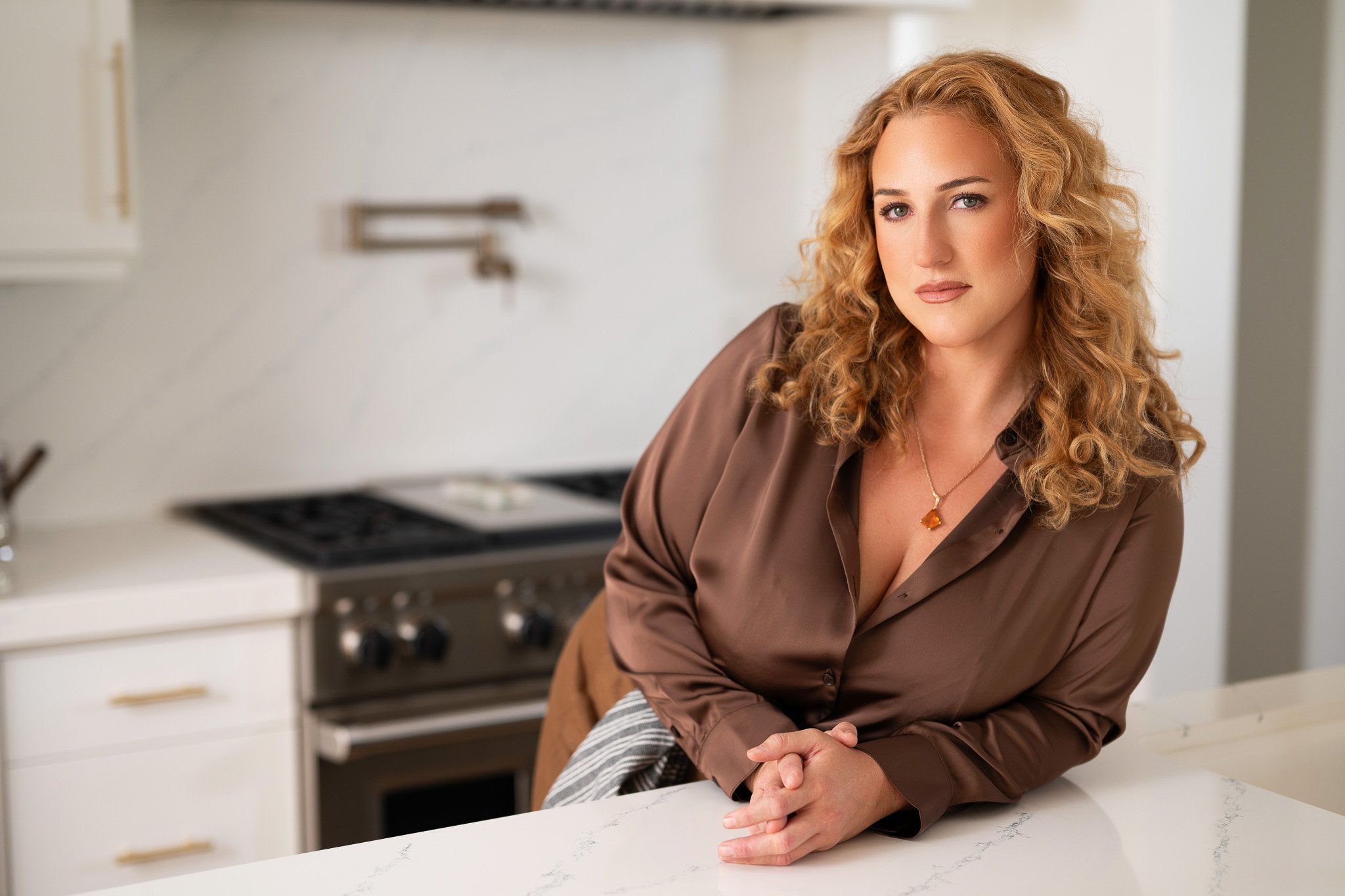
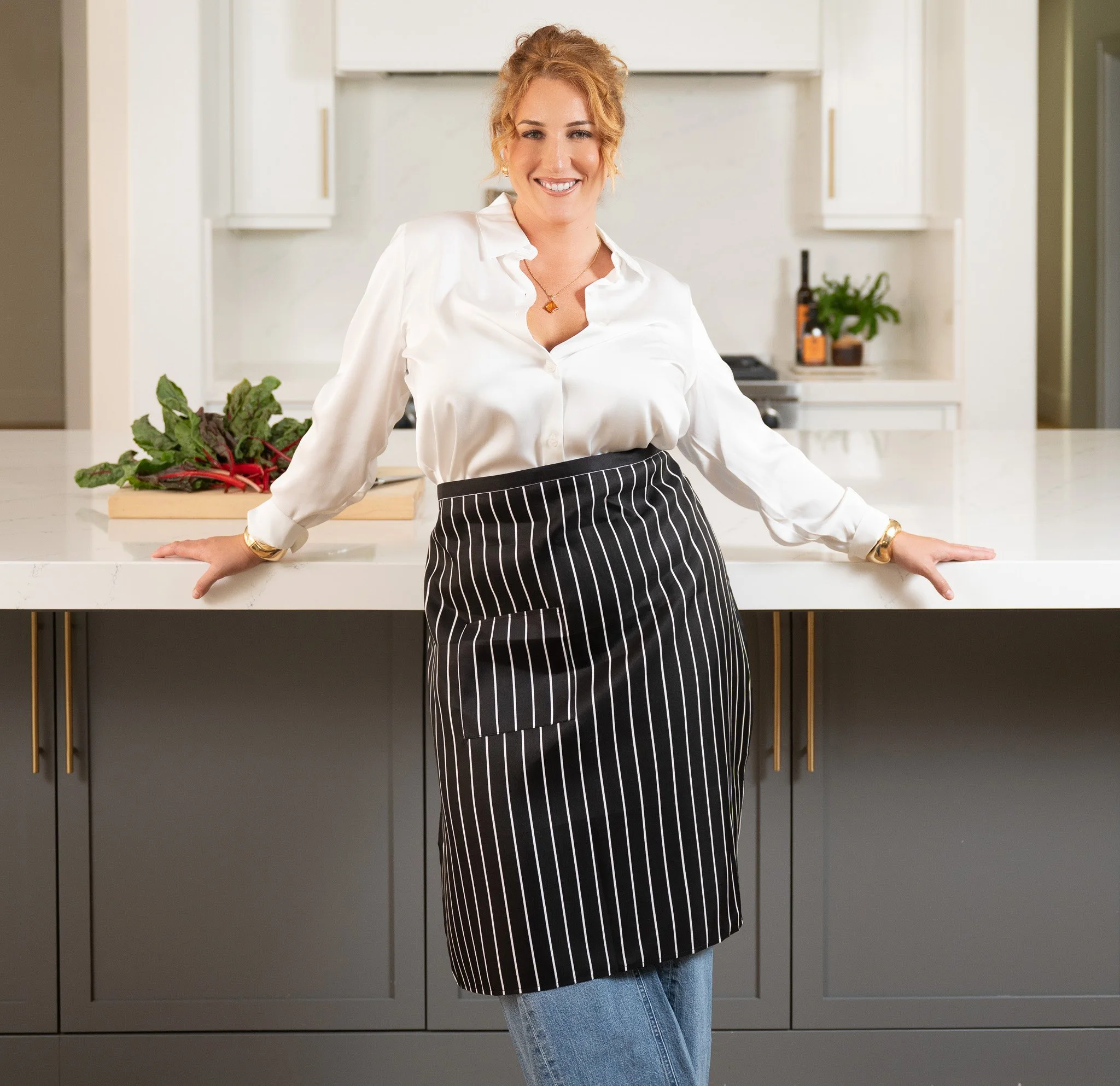
Chef Danielle Coombs built a million-follower platform and a thriving private-chef career by doing the thing that has always come most naturally: feeding people. At 30, Chef D is still hungry for more, but success these days looks less like chasing the hustle and more like building a life, a business, and ultimately a legacy that feel entirely her own. Chef D is a personality, a platform, and an increasingly recognizable brand. Danielle Coombs is the woman who built it. And before she is any of those things, she is a chef. “I am a chef before I am any other title,” she says. “That is what comes most naturally to me.” Perhaps that simplicity is the key to understanding a career that, from the outside, appears anything but.
There is a particular kind of adrenaline that comes with dinner service, and Chef D knows it well. Private dinners are her favorite days—the long ones, the ones that begin well before anyone arrives and end after the last plate has been cleared. A single gathering can require two days of preparation and culminate in a 19-hour sprint through someone else’s kitchen. There are ingredients to source, menus to execute, people to feed, details to anticipate. Once service begins, the hours disappear. “It’s a drug,” she says. “Feels like I’m on a high when I’m cooking on those jobs.”
This is the part of her life that still makes her feel most alive. Her business has grown far beyond the kitchen. There are brand meetings and partnerships managed from her phone, hours of footage to film, and another 25 to 50 hours some weeks spent editing what may eventually become a three-minute video. More than one million people now follow the work she shares online. Yet despite the visibility, Chef D’s real life remains surprisingly private. She estimates that perhaps 10 percent of it ever makes its way to social media. Her home, closest relationships, heartbreaks, vacations, and much of her work remain hers alone.
Private chefs occupy an unusual place in the culinary world. The kitchen is professional territory, but the setting is intimate. There is no dining room separating chef from guest, no pass concealing the mechanics of service. Instead, Coombs steps directly into homes, families, and traditions. Compatibility matters. “Being inside someone’s home is an honor,” she says. “If it is not the right match, it just won’t work.” Some relationships do not. Others have lasted nearly seven years.
For Coombs, successful private-chef work is as rooted in hospitality as it is food. She must understand the host, converse with guests, navigate a household, and respect the responsibility of cooking in a kitchen that is not her own, all while executing dinner. Children gather nearby. Guests watch from across the island. The kitchen itself becomes part stage, part dining room, part family room. And often, what matters most is not the most elaborate thing on the plate. “My clients have taught me that sometimes the food isn’t the most important part about private cheffing,” she explains. “Making my clients’ lives easier and more convenient is at the top of the priority list.”
That understanding has changed the way she approaches service. She pays attention to children as deliberately as adults, learning what they like and finding ways to make family dinner something they anticipate. She listens when clients recount meals from vacations or restaurants, cataloging the details that reveal preference without requiring a formal request. A simple comment made months earlier can later reappear as inspiration on a menu. To feed someone well, she has learned, is first to notice them. It is particularly meaningful in the Central Valley, where food carries an intimacy of another kind.
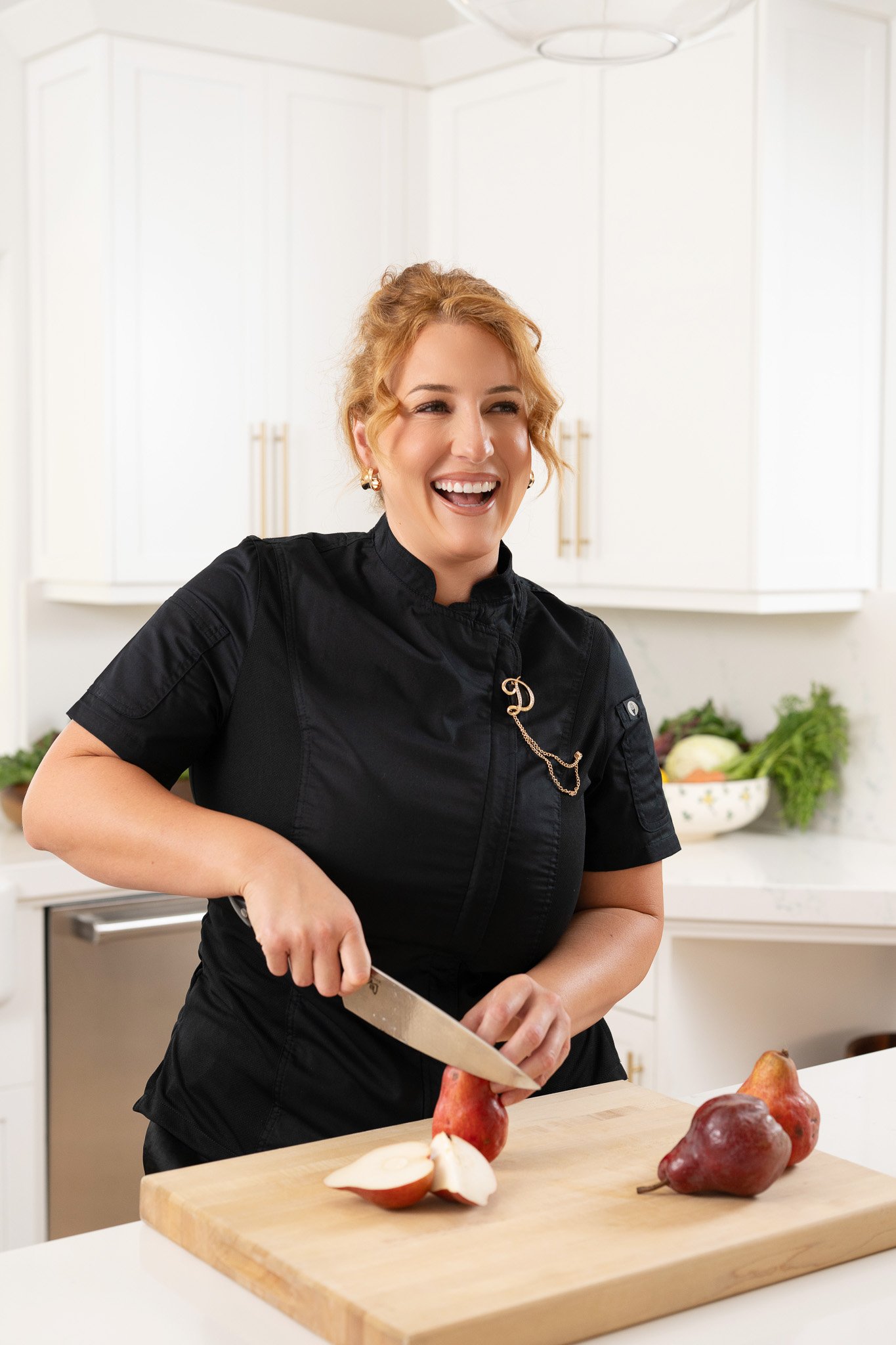
Coombs was raised in Modesto and moved to Fresno at 18 to attend Fresno State. She once imagined college as a stop on the way to somewhere else. Instead, she stayed, building a career in a region whose relationship with agriculture steadily became inseparable from her own culinary identity. Here, a client may have grown the almonds she is using, raised the beef she is cooking, or know intimately what it took to bring the fruit on the table into season. “It is the biggest flex to serve my clients the food they grow,” she says. “It feels like a full-circle moment.”
Her cooking reflects that proximity. Menus begin with what is growing now. Stone fruit softens the brutality of a Central Valley summer—peaches, nectarines, plums, cherries and apricots—before figs deliver what she calls the season’s “glorious kiss goodbye.” Pears follow, then citrus, around which winter menus take shape. There is California beef and fresh pasta, something she says calms her simply in the forming of it. There is fire whenever possible.
Central Valley weather, after all, means much of the year is grilling weather. Wood smoke, outdoor kitchens, pool days, family gatherings, and produce picked at its best all belong naturally to her culinary vocabulary. Ask Coombs what single meal best represents her cooking and she resists the premise. The answer should change with the season. But the feeling should not. “I want my food to make someone feel happy and warm on the inside,” she divulges. “Like someone they love has fed them.”
The instinct to cook arrived long before the business acumen required to build a career from it. Coombs says she knew by nine years old that she wanted to be a chef. Food Network became her after-school education: Barefoot Contessa, Good Eats, Iron Chef America, Jamie Oliver, Rachael Ray, and others streamed across the television while she scrambled to handwrite instructions quickly enough to keep pace in an era before pausing live television was a given.
Her mother did not love cooking herself, but she understood her daughter and prioritized having a healthy, home-cooked meal on the dinner table nightly. During the 2008 recession, a temporary return to the hospitality industry put Coombs’ mother in management at one of the nicer restaurants in town. On Sundays, she began sneaking her 13-year-old daughter into the kitchen for brunch service around 5:00AM. Coombs worked under the pastry chef. Another cook gave her a chef coat and hat. “I felt so happy,” she remembers. “It was a dream and I never missed a Sunday.” Her parents, she says, offered complementary forms of encouragement. Her mother believed deeply in following one’s heart. Her father placed equal emphasis on education.
“I am a chef before I am any other title. That is what comes most naturally to me.”
When a scholarship created an opportunity to attend Fresno State, he urged her to take it. College would eventually become an exercise in persistence. Coombs entered a new Culinology program blending culinary arts and food science, only to find herself increasingly frustrated by the chemistry-heavy curriculum. After struggling for nearly four years through a degree that felt fundamentally misaligned with what she wanted, she finally reached a breaking point. “I just want to cook,” she told an administrator. The response changed everything, resulting in the creation of her own degree.
Courses were drawn from food science, dietetics, entrepreneurship, marketing, food law, computer science, butchery, and other disciplines and assembled into a course of study better suited to her intended career. The proposal was approved, Coombs finished college, and the experience gave her technical knowledge she still uses when troubleshooting recipes today. But she is quick to make the distinction: college did not teach her how to cook. Nor, she says, did it truly teach her how to become an entrepreneur.
That education began once school ended. COVID erased the familiar pathway into hospitality just as Coombs was preparing to enter it. At home with her sister and friends, she cooked constantly—experiments, desserts, cocktails, splurges, and struggle meals—putting her stimulus money back into groceries and posting lengthy step-by-step cooking videos to Snapchat. At the urging of her sister and best friend, she created an Instagram page: Chef D All Day. The name still remains.
What began almost incidentally evolved into food photography, recipe videos, and eventually a portfolio. Her first private-chef position came through the page. Then more people saw her work. More people booked. She said yes. And then yes again. For two years, she says, she said yes to virtually everything, often working punishingly long days while teaching herself the parts of the business she did not yet understand. Then four seconds changed her perspective. A clip of Coombs basting a filet in butter reached 27 million views. Suddenly, social media no longer looked like a place merely to document the work. It was an opportunity. So she got to work again.
There was grief inside those years, too. Coombs was 25 when her father died from cancer. She had been beside him as the disease progressed, and in the aftermath, work became somewhere to disappear. She took every job she could. She stayed busy enough not to feel what had happened until, months later, grief caught up with her. She left California and spent 14 days alone in a Seattle hotel room, surrounded by a city of strangers and removed from the momentum she had used as armor.
When she returned, something had shifted. She went back to work, but she no longer wanted to cook from anger or survival. She wanted to make her father proud. She wanted her mother to stop worrying. “It felt like I was cooking from my heart again,” she says, “even if it was broken.” That period remains part of her story without becoming the whole of it. In the years since, Coombs has become increasingly intentional about what a sustainable version of ambition actually requires.
In her mid-twenties, success meant winning. “The grind, achievements, chase the hustle,” she recalls. Now, her definition is strikingly different. “How much do you actually like your life? And are you healthy?” Today, physical strength is not separate from her business plan—it supports it. Private dining is demanding work, and she trains accordingly through weight lifting, kickboxing, and long walks, crediting the investment in her health with increasing what she is physically able to give to her career. Slow mornings coexist with intense workdays. Prayer is woven through both.
She bought a home last year. She loves her work. She feels strong. And she compares her business to a fruit tree. Six years ago, she planted a seed. She watered it, protected it, spoke about it with love, and continued caring for it during years when there was no fruit to show for the labor. Now there is. The private dinners. The clients. The brand partnerships. The house. The million-plus audience. None of it, she insists, happened by luck. “I wake up every day grateful for the life I have,” she says. “I am the happiest I’ve ever been.” That may be the most telling measure of all.
Chef D does not romanticize entrepreneurship. Being naturally gifted at cooking did not make her naturally gifted at accounting, banking, taxes or investing. Those responsibilities proved significantly more frustrating. Eventually, success allowed her to hire professionals to handle areas that once overwhelmed her. The lesson was not that she needed to become equally exceptional at everything. It was learning what only she could do. “No one is going to show up for you as hard as you show up for yourself,” she understands.
Coombs studies social media as deliberately as she studies food. She analyzes what works, challenges herself against it, and edits hours of footage into polished narratives that encourage strangers to cook. Some of the moments she values most happen offline when followers stop her to say that her videos brought them back into the kitchen. That is where platform becomes purpose. Her digital work may have amplified the business, but it has not replaced the craft at its center. When inspiration stalls, she returns to the wall of cookbooks in her home. She watches chefs, travels, eats other people’s food, and tries unfamiliar recipes. To get better, she believes, one must remain teachable.
At the beginning of her career, Chef D was trying to prove that she could make a life from cooking. The next chapter is about deciding what to do with the life she proved possible. There will be books, she believes. Travel. More cuisines and cultures to study. Other chefs and farmers to meet. Perhaps eventually teaching, motivational speaking, and mentorship. She wants to find ways to use her skills to feed people who need it and encourage those still trying to make their own unlikely ideas real. “My twenties laid a foundation for my career,” she says, “but my thirties will be where I create a legacy.” For all the ambition contained in that word, Coombs’ definition of legacy is unexpectedly simple.
She wants to be remembered as a woman who relentlessly chased her dreams. Someone who made something from nothing. Someone associated with goodness. Someone who used food to leave the world a little better than she found it. Someone who fed people. “Nourishment for the soul and stomach,” she calls it. For Chef D, perhaps that has been the point all along. Not the follower count. Not virality. Not even the business itself. The table. The people gathered around it. And the lasting privilege of being the person who gets to feed them.
Editorial Director Lauren Barisic
Photographer Ellie Koleen
Stylist Alma Wolverton
Hair Melissa Souza
Makeup Mattie Garcia